Industries
Six industries with six different definitions of a good pallet.
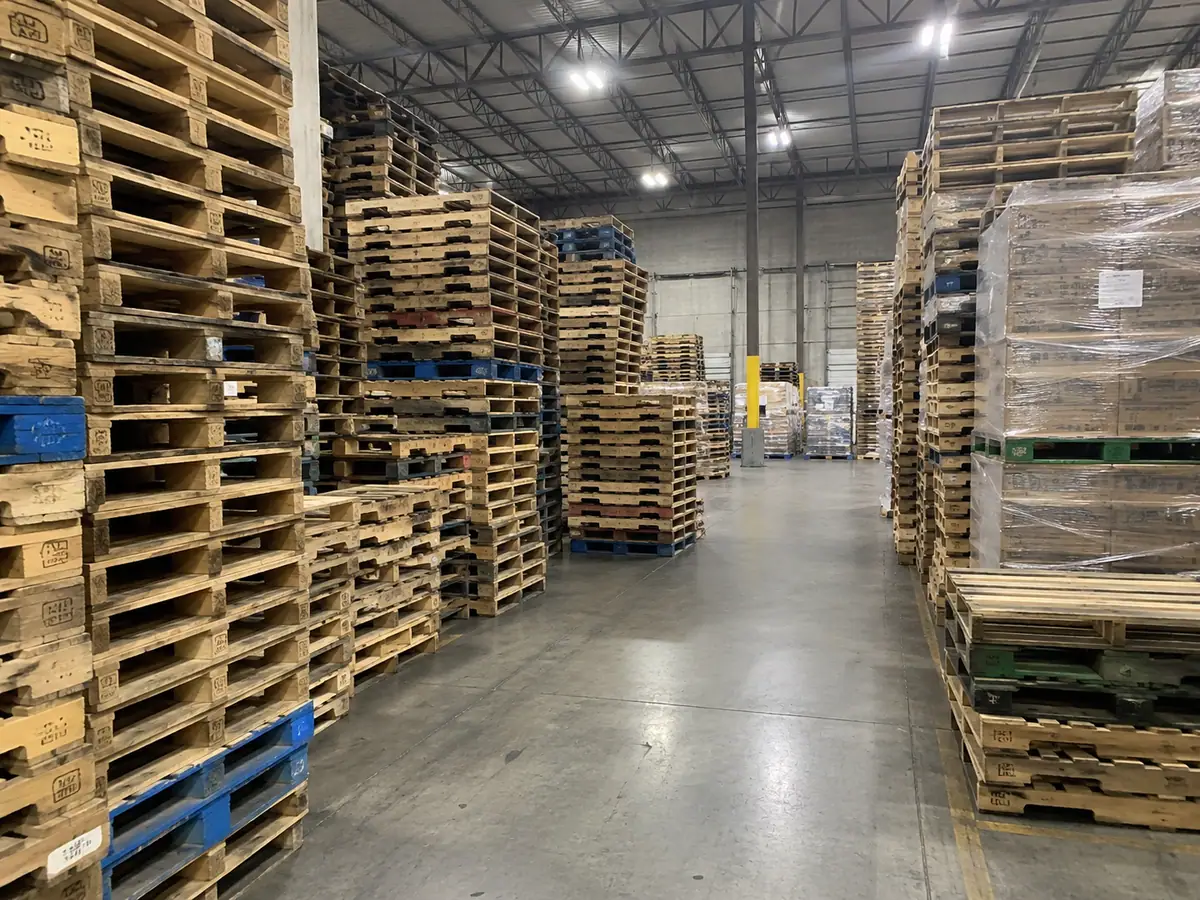
Tell us your sector
Different industries get different sorting rules here. Name yours in the message field and the quote will reflect it.
- Written quotes, usually inside one business day
- Loads from 100 pallets to full 53' trailers
- We buy as readily as we sell — tell us which way it flows
Segregation
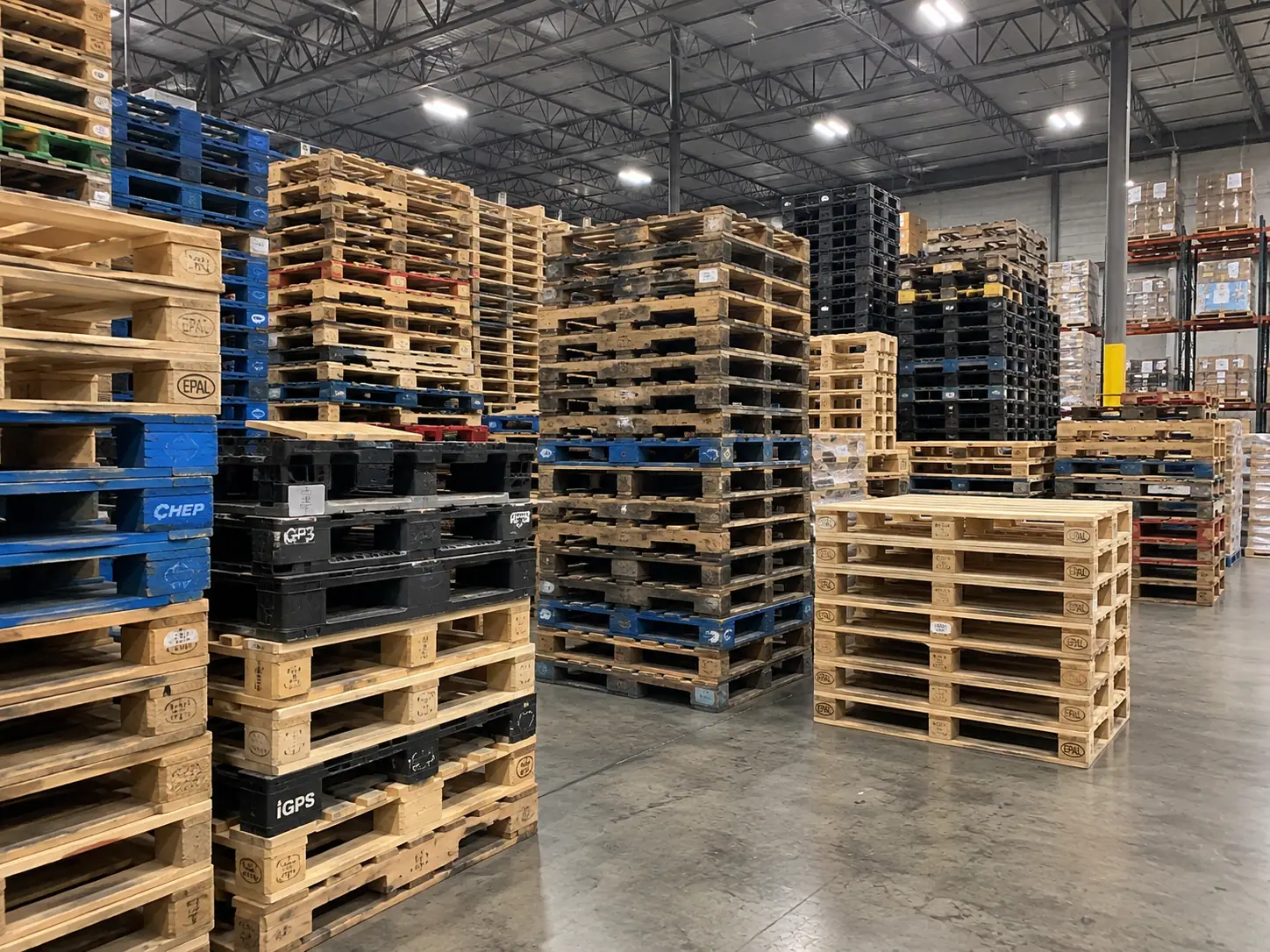
Sorted by type, not by convenience. Pooled units go back to the pool; plastic runs a separate stream entirely.
Where the rules diverge
The specification changes more than the price does.
Food & Beverage
In every other industry a pallet is a platform.
OpenSector02Agriculture & Greenhouse
Agriculture has a pallet problem that no other industry shares: you need forty thousand of them in six weeks, and then none for eight months..
OpenSector03Manufacturing
Manufacturing is where cost per cycle beats cost per unit by the widest margin, and where a repair programme is worth more than a purchasing negotiation..
OpenSector04Retail & Distribution
The only sector where a pallet has to look good.
OpenSector05Chemical & Industrial
Four full drums is nearly two and a half thousand pounds resting on four steel rings.
OpenSector06Construction & Building
Nobody returns a pallet from a building site.
OpenAt a glance
What each sector actually insists on.
| Sector | Usual grade | Footprint | The non-negotiable | Returns? |
|---|---|---|---|---|
| Food & beverage | Grade A | 48 × 40 | Odour, moisture and known provenance | Often |
| Agriculture | Grade B / collars | 48 × 40, bins | Seasonal availability | Sometimes |
| Manufacturing | Grade A | 48 × 40, 48 × 45 | Dimensional consistency | Always |
| Retail & distribution | Display grade | 48 × 40, 36 × 36, half | Appearance | Rarely |
| Chemical & industrial | Heavy deck | 48 × 48, 42 × 42 | Concentrated load capacity | Sometimes |
| Construction | Heavy-deck B | 48 × 40, custom | Cheapest thing that survives one trip | Never |
Questions
Specifying a pallet by sector.
Which six industries do you write separate grading rules for?
Food and beverage, agriculture and greenhouse, manufacturing, retail and distribution, chemical and industrial, and construction and building. Each has its own page setting out the usual grade, the footprint we send and the one criterion that gets a load rejected.
Does the price change much from one sector to the next?
Less than people expect. Across these six sectors the unit price of a 48×40 varies by maybe fifteen per cent. What varies enormously is the acceptance criteria — the sort, not the pallet. A display-graded pallet and a construction pallet can come off the same incoming trailer.
Why can a foundry take a pallet a bakery would reject?
Because odour, staining and moisture are structural-grade irrelevant and food-plant fatal. A pallet that smells of solvent is fine under a casting and is how you lose a food account permanently, so stock bound for food work gets an additional sort on top of the structural grade.
My sector is not one of the six. Can you still supply me?
Yes. These six are simply the ones we have handled long enough to write the rules down. Everything leaves the same sort deck and the same size library; tell us what the pallet carries and where it goes and we will set the sorting rule with you.
How do I make sure a quote uses my sector's rules?
Name the sector in the message field. It changes what we pull, not just what we charge, and it is the single most useful line you can give us. Quotes come back within one business day, priced delivered rather than FOB.