Since 2009
We started because a warehouse manager could not give pallets away.
Start a conversation
Whether you are buying, selling or just working out what your pallets cost you, the form goes to the same desk it did in 2009.
- Written quotes, usually inside one business day
- Loads from 100 pallets to full 53' trailers
- We buy as readily as we sell — tell us which way it flows
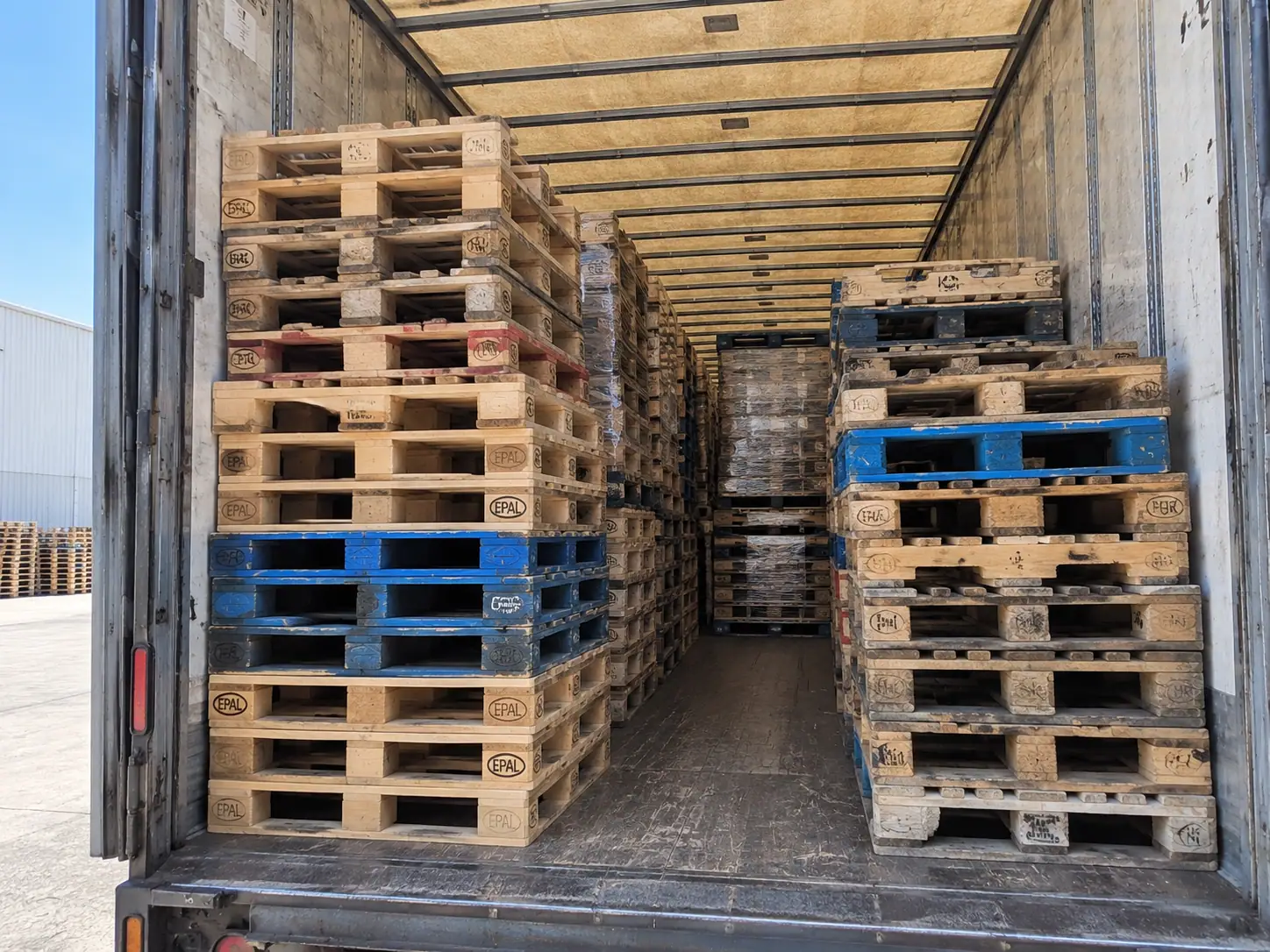
Loaded
About 330 units, two high, roughly 15,000 lb in a trailer rated for three times that. Pallet loads cube out long before they gross out.
The recession had done something strange to the pallet market. New pallet prices had collapsed along with everything else, and the yards that normally bought used cores had stopped answering the phone. So there were pallets everywhere — behind docks, along fences, in fields — and no economic mechanism moving them.
Our founder was working freight at the time and kept seeing the same stacks on the same routes, month after month. The arithmetic was not complicated: a hardwood pallet contains roughly twenty-four board feet of lumber that somebody paid to harvest, mill and dry, and throwing it away is a strange thing for a civilisation to do at any price.
He bought a 1997 flatbed, rented half an acre off Alum Creek Drive, and started collecting for free from people who were glad to see the back of them. The first year the entire operation was one truck, a pry bar, a nail gun and a hand-written ledger. Roughly eleven thousand pallets went through it.
What changed the business was not scale. It was a decision, made somewhere around 2012, to grade honestly even when a customer would not have noticed the difference. That sounds like the sort of thing a company says about itself on a page like this one, so here is the specific version: we stopped selling repaired-stringer units as Grade A, which at the time cost us about eleven per cent of our revenue and two of our five biggest accounts.
Both of those accounts came back within eighteen months, and one of them is still with us. That is the entire strategic insight this company has ever had.
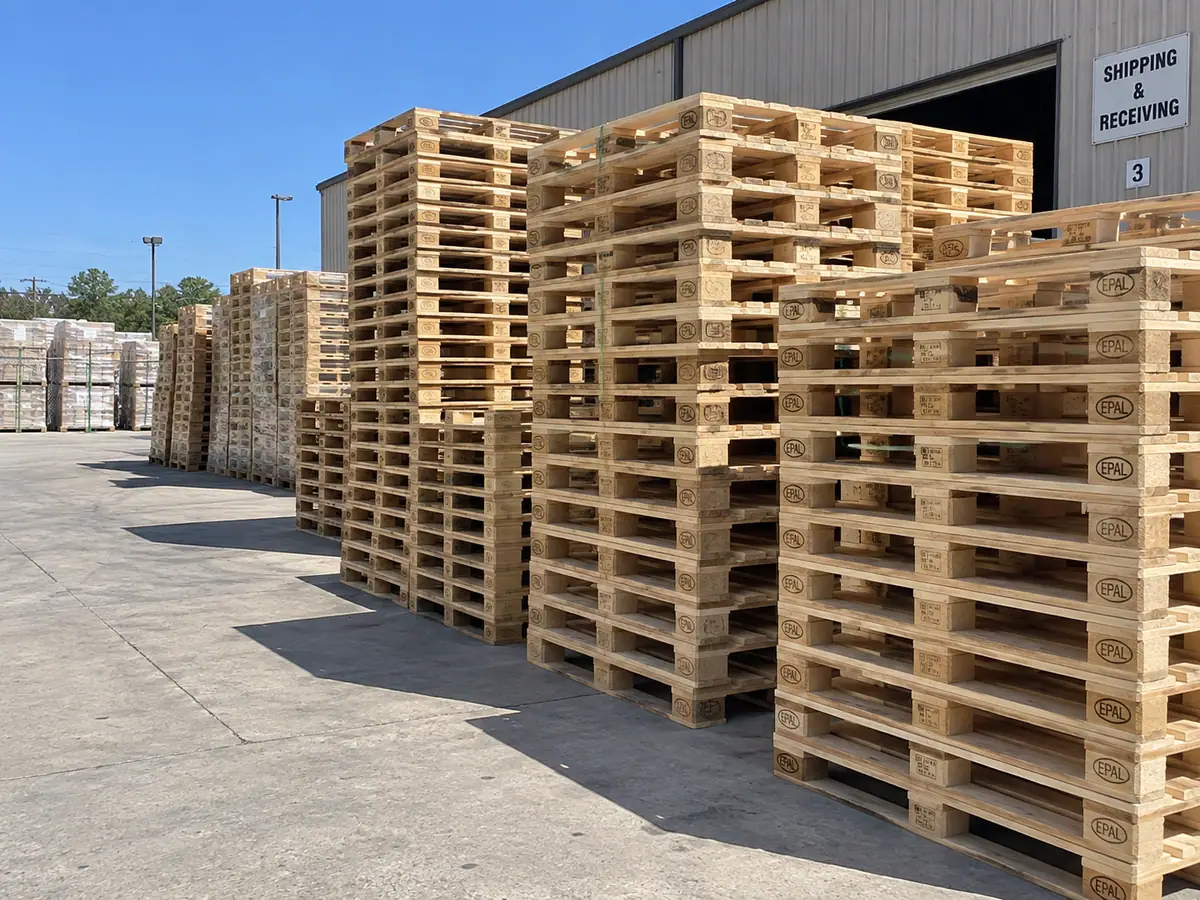
Today the yard at 7240 S Access Rd handles around 1.6 million pallets a year across six states, with a landfill diversion rate of 99.4% by weight. The ledger is a database now. The pry bars are much the same.
The first thing we ever repaired
Why Columbus
Where we are now
The yard, in numbers.
2009
Founded
One flatbed, half an acre off Alum Creek Drive.
1.6M
Pallets a year
Bought, graded, repaired or recycled.
99.4%
Landfill diversion
By weight, across 2025 intake.
6
States served
Ohio, Indiana, Kentucky, Michigan, Pennsylvania, West Virginia.
What we believe, minus the mission statement
Four things we have not changed our minds about.
- 01
A grade is a promise or it is nothing
If Grade A means whatever is convenient this week, it means nothing, and the customer eventually works that out. We publish our criteria and replace anything that misses them.
- 02
Reuse beats recycling; recycling beats burning
The hierarchy is not sentimental, it follows from where the embodied energy sits. Keeping a board in service is always better than turning it into fibre, and we structure the yard around that.
- 03
Publish the bad number too
Our landfill rate is 0.6%. Our internal audit finds a mis-grade in roughly one unit in six hundred. Both of those numbers are on this website because a company that only publishes its good ones is telling you something.
- 04
Say no when the answer is no
If a load has no value, we say so. If a yard closer to you is the better buy, we say so. It costs us business we were unlikely to keep anyway.
Questions
What people ask about how we got here.
When did RePallet USA start, and with what?
Autumn 2009. A 1997 flatbed, half an acre rented off Alum Creek Drive, a pry bar, a nail gun and a hand-written ledger. Roughly eleven thousand pallets went through it in the first year, collected free from people who were glad to see the back of them. The full timeline has every year since.
Why is the yard in Columbus?
Freight arithmetic, not sentiment. Columbus sits inside a one-day truck radius of about sixty per cent of the United States population, which is why so much distribution capacity is here — and distribution capacity generates pallets in enormous quantities. The numbers would not work from almost anywhere else.
What was the 2012 grading decision, and what did it cost?
We stopped selling repaired-stringer units as Grade A, even though most customers would not have noticed. It cost about eleven per cent of revenue and two of our five biggest accounts. Both came back within eighteen months and one is still with us. That is the entire strategic insight this company has ever had.
How big is the operation now?
The yard at 7240 S Access Rd handles around 1.6 million pallets a year across six states — Ohio, Indiana, Kentucky, Michigan, Pennsylvania and West Virginia — with a landfill diversion rate of 99.4% by weight across 2025 intake. The ledger is a database now. The pry bars are much the same.
Why do you publish your bad numbers?
Because a company that only publishes its good ones is telling you something. Our landfill rate is 0.6%. Our internal audit finds a mis-grade in roughly one unit in six hundred. Both are on this website, along with the two years we lost money, for the same reason: the good numbers are worthless if you cannot see the method that produced them.
Go deeper
Two pages most visitors never find.
The full timeline, year by year, including the two years we lost money. And a walk around the yard itself — the equipment, the crew, and what a Tuesday actually looks like.