Not in the main menu
Seventeen years, including the two we would rather skip.
Work with us
Seventeen years of this and the form still goes to the same desk.
- Written quotes, usually inside one business day
- Loads from 100 pallets to full 53' trailers
- We buy as readily as we sell — tell us which way it flows
Outbound
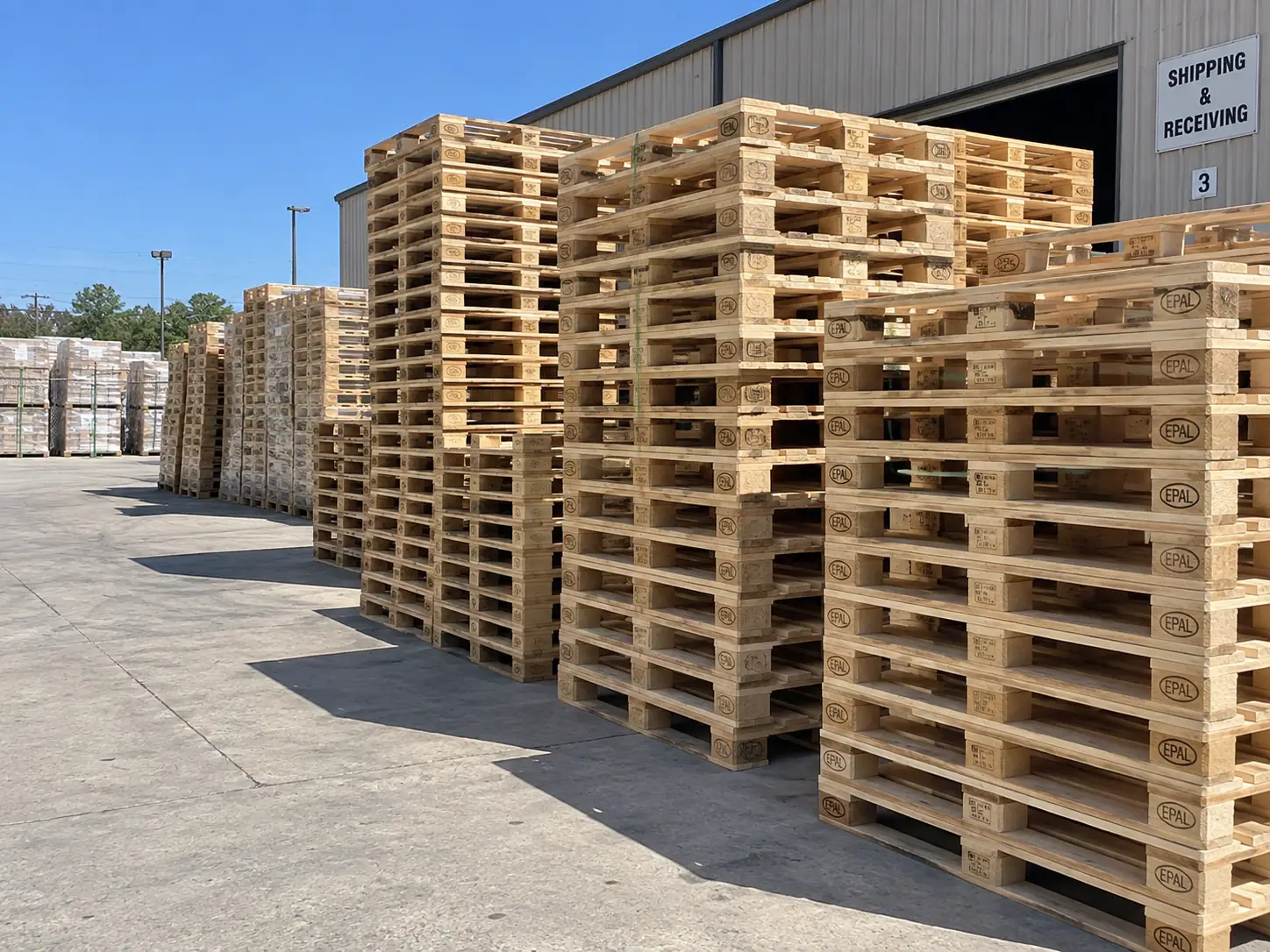
Banded, counted and staged against the door. Stacks of fifteen, double-banded, the way a forklift expects them.
Year by year
The whole thing.
- 200911,000 units
One truck, half an acre
A 1997 flatbed and a rented half-acre off Alum Creek Drive. Collections were free because nobody else wanted the material. Roughly 11,000 pallets handled in the first fourteen months.
- 201034,000 units
The first repair bench
A pry bar, a nail gun and a rack of boards salvaged from units too broken to save. The insight that dismantling feeds repair — the loop the whole business now runs on — dates from this year and was entirely accidental.
- 201161,000 units
First hired grader
Until this point one person did everything. The first dedicated grader arrived and immediately started rejecting work the founder had been passing. This was uncomfortable and correct.
- 201258,000 units — down
The grading decision
We stopped selling companion-repaired stringer units as Grade A. It cost about 11% of revenue and two of five major accounts inside a quarter. Both came back within eighteen months; one is still with us.
- 2013140,000 units
Moved to South Access Road
Four acres, a proper concrete pad and covered storage. Covered storage is unglamorous and it changed our grade mix more than any piece of equipment we have ever bought.
- 2015310,000 units · 91% diversion
First grinder
Until now, broken wood left as scrap for someone else to process. The grinder turned the last 15% of intake from a cost into a product, and pushed diversion past 90% for the first time.
- 2016480,000 units
Fleet, not freight
Three tractors and eleven trailers. Owning the equipment meant we could run fixed lanes rather than dispatched loads, which is what made delivered pricing competitive outside Franklin County.
- 2018690,000 units
Heat treatment
ISPM-15 registration and an on-site chamber. Export customers had been asking for four years and we had been sending them elsewhere.
- 20201.05M units
The year everything moved
Pandemic distribution volumes were extraordinary and the lumber market went vertical. Recycled pallets went from a cost-saving to the only available option for many buyers. We turned away work for the first and only time.
- 20211.1M units · loss-making
A bad year, honestly reported
Lumber prices peaked and core prices followed. We had contracted forward at fixed prices with several customers and honoured every one of them at a loss. It was the right call and it hurt for four quarters.
- 20221.24M units
The Pallet Passport
Customers started asking for diversion documentation their auditors would accept. Rather than write a marketing PDF we built a per-load record traceable to scale tickets. It has since become the thing people mention first.
- 20231.38M units · 97.9% diversion
Managed programs
The realisation that most customers were buying pallets from us and paying someone else to take pallets away, with nobody adding the two invoices together. Program customers now account for about 40% of volume.
- 20241.5M units · 99.1% diversion
Second grinder and colour line
Mulch demand outgrew the single grinder. The dye line opened a municipal landscape market that now absorbs most of what the sort deck rejects.
- 20251.6M units · 99.4% diversion
99.4%
Diversion reached 99.4% by weight. The residual 0.6% is treated and contaminated wood we are not permitted to process, and we have no credible plan to reduce it further without lying about what we accept.
- 2026Current
Where we are
Thirty-one people, four acres, two grinders, nine trailers on fixed lanes across six states. Still grading by hand, because nothing else works.
Questions
What people ask about these seventeen years.
Which years on this timeline went backwards?
Two. In 2012 volume fell from 61,000 units to 58,000 because we stopped selling companion-repaired stringer units as Grade A and lost two of five major accounts. In 2021 we handled 1.1 million units and still lost money, because we had contracted forward at fixed prices before lumber peaked and honoured every one of those contracts.
What single change moved the landfill diversion rate the most?
The first grinder, in 2015. Until then broken wood left the yard as scrap for somebody else to process. The grinder turned the last 15% of intake from a cost into a product and pushed diversion past 90% for the first time. A second grinder and the colour line in 2024 took it to 99.1%, and 2025 closed at 99.4%.
When did you start heat treating for export?
2018 — ISPM-15 registration and an on-site chamber. Export customers had been asking for four years before that and we had been sending them elsewhere rather than pretend we could stamp a pallet we had not treated.
Where did the Pallet Passport come from?
2022. Customers started asking for diversion documentation their auditors would actually accept, so instead of writing a marketing PDF we built a per-load record traceable back to scale tickets. See the Pallet Passport — it is now the thing people mention first.
What does the company look like at the end of this timeline?
Thirty-one people, four acres, two grinders and nine trailers on fixed lanes across six states, handling about 1.6 million units a year. Still grading by hand, because nothing else works. The yard and crew page walks through the site as it stands.