Compliance guide · 8 min read
ISPM-15 explained without the jargon.
Last reviewed January 2026 · Written by the RePallet USA yard team
Ask us about anything on this page
These guides are written by the people who grade the pallets. If something here does not match your situation, tell us in the message field.
- Written quotes, usually inside one business day
- Loads from 100 pallets to full 53' trailers
- We buy as readily as we sell — tell us which way it flows
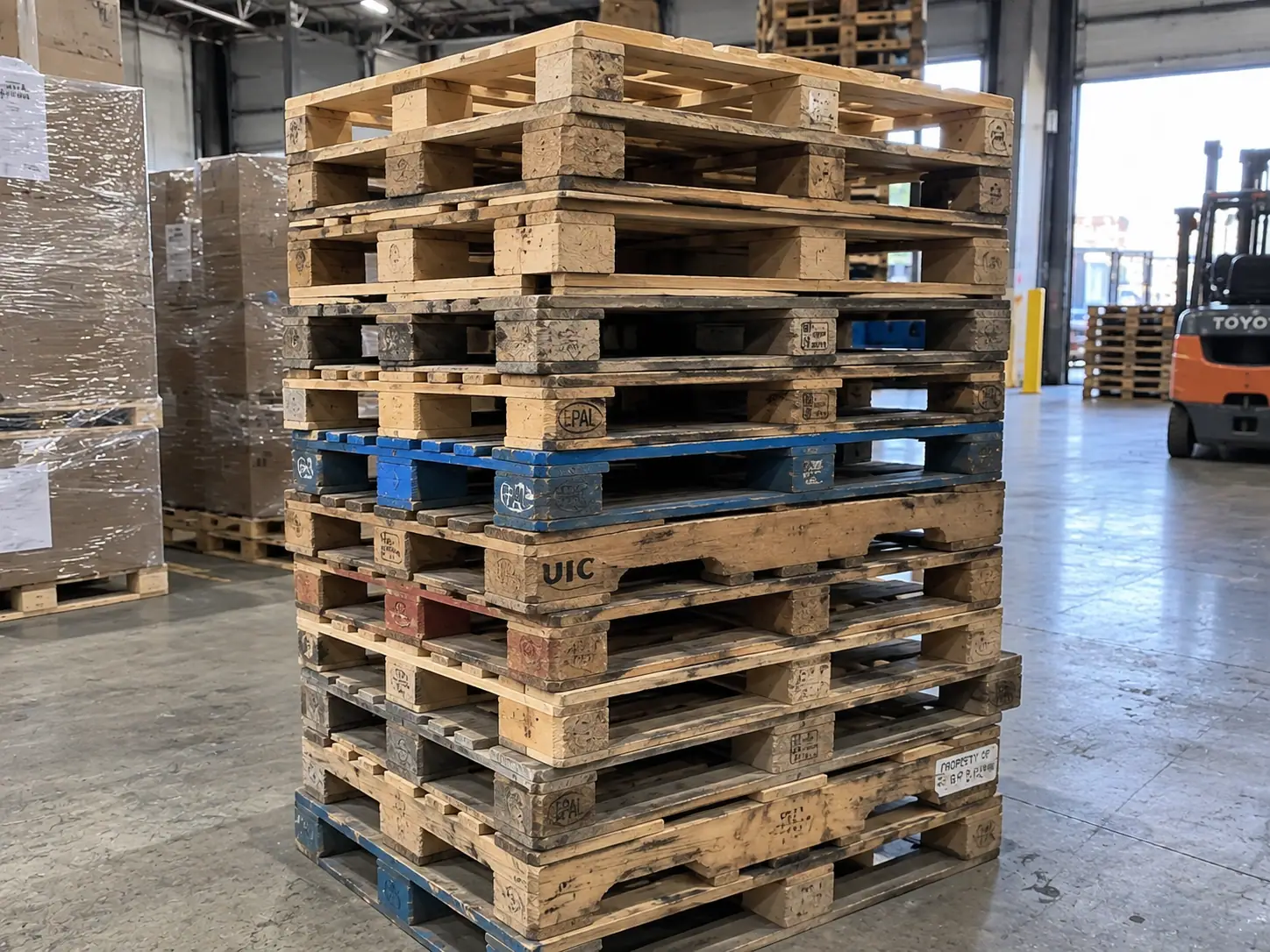
One stack
Fifteen high and square. A stack that leans is a stack somebody has to touch twice.
Why it exists
A rule written because of beetles
ISPM-15 is an International Plant Protection Convention standard adopted in 2002, and it exists because untreated wood packaging turned out to be an extraordinarily efficient way to move wood-boring insects between continents. The emerald ash borer, the Asian longhorned beetle and several others arrived in exactly this way.
The response was to require treatment of the packaging rather than inspection of it, which is a much more tractable problem. Heat the wood enough to kill anything living in it, mark it so inspectors can see the treatment happened, and move on.
It applies to pallets, crates, dunnage, blocking and bracing. It does not apply to processed wood products — plywood, OSB, particleboard — because the manufacturing process already does the job. It does not apply to plastic or metal platforms at all.
Reading the mark
Four elements, and all of them matter.
A valid IPPC mark carries the wheat symbol, a two-letter ISO country code, a unique facility registration number, and a treatment code. In the United States you will usually also see a certifying agency logo alongside it.
The treatment codes worth knowing: HT is conventional heat treatment. DH is dielectric heating. MB is methyl bromide fumigation, which is being phased out globally and is refused outright by a growing list of countries.
One common confusion worth clearing up: KD, meaning kiln dried, is not an ISPM-15 mark. Kiln drying and heat treatment are different processes with different requirements, and a KD stamp will not clear customs.
- IPPC wheat symbol — a plain text stamp is not compliant
- ISO country code, e.g. US
- Facility registration number, issued nationally
- Treatment code: HT, DH or MB
- Marked on at least two opposing sides, legible and permanent
- KD (kiln dried) is not the same thing and will not clear
How shipments get held
Four failures, in order of frequency
- 01Repaired with untreated lumberBy far the most common. A compliant pallet repaired with a non-treated board is no longer compliant, and the unit must be re-treated and re-marked. Any repair yard handling export stock must track this, and many do not.
- 02The mark is obscuredStretch wrap across the stamp, a shipping label over it, or yard paint. If an inspector cannot read it, the pallet is treated as unmarked.
- 03Bark left onSome destinations require debarked wood in addition to treatment. Residual bark along a stringer edge is enough to trigger a hold.
- 04Assuming an exemption still appliesRegional exemptions exist and they change. Confirm the current rule for your specific lane and commodity with your broker rather than relying on what was true last year.
Practical decisions
Do you actually need it?
| Shipment | ISPM-15 required? | Note |
|---|---|---|
| Domestic US | No | Paying for treatment here is money wasted |
| US to most of the world | Yes | Treat and mark before dispatch |
| US ↔ Canada / Mexico | Check per lane | Regional arrangements exist but vary by commodity |
| Plastic pallets, anywhere | No | Outside the scope entirely |
| Plywood or OSB platforms | No | Processed wood is exempt |
| Dunnage and bracing | Yes | Frequently forgotten, frequently caught |
Questions
ISPM-15 questions
Can a recycled pallet be ISPM-15 compliant?
Yes. Treatment is about heat history, not age. A recycled unit with a valid, legible mark and no untreated repairs is compliant. See heat-treated pallets.
Who can apply the mark?
Only facilities registered under the national scheme, using their own registration number. Applying an IPPC mark without that registration is fraud, not a shortcut.
What happens if a shipment is held?
Typically re-export at your cost, treatment at the port, or destruction — plus demurrage while it is sorted out. The cost is usually measured in thousands, which is why the pedantry is justified.
Does heat treatment weaken the wood?
Not meaningfully at ISPM-15 temperatures. It does dry the wood, which is generally an improvement — dry wood is stiffer and less prone to mould.
What should I do with pallets stamped MB?
Methyl bromide fumigation is still a recognised ISPM-15 treatment, but it is being phased out globally and a growing list of destinations refuses it outright. Check the rule for your specific destination before the unit is loaded, and if there is any doubt at all, ship on HT-marked stock instead. Keeping MB units out of the export pool altogether is simpler than checking lane by lane.
Tell us the destination country.
It changes the answer more than the pallet does. Give us the lane and the commodity and we will tell you exactly what needs to be stamped.