Comparison · 8 min read
Pallet pooling vs buying: an honest comparison.
Last reviewed January 2026 · Written by the RePallet USA yard team
Ask us about anything on this page
These guides are written by the people who grade the pallets. If something here does not match your situation, tell us in the message field.
- Written quotes, usually inside one business day
- Loads from 100 pallets to full 53' trailers
- We buy as readily as we sell — tell us which way it flows
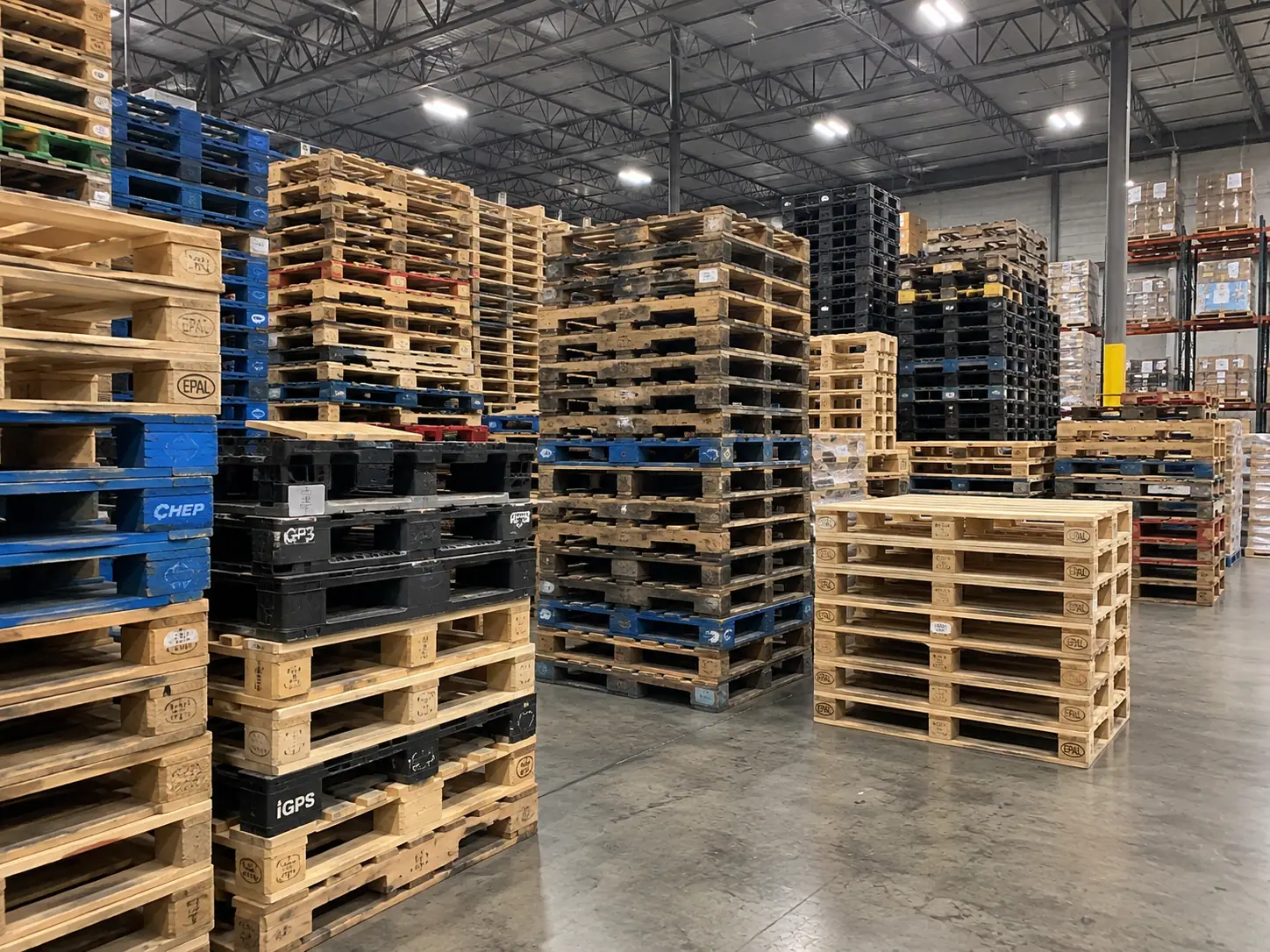
Segregation
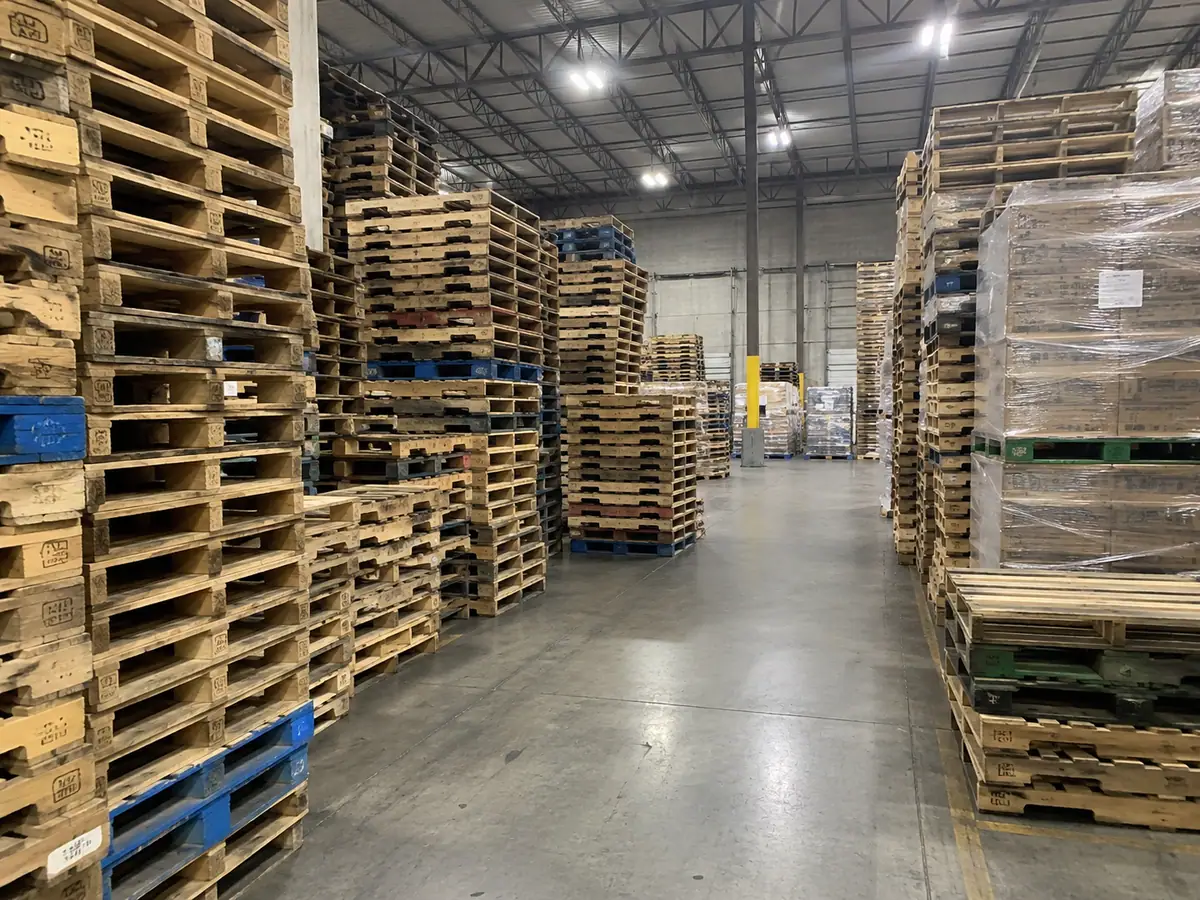
Sorted by type, not by convenience. Pooled units go back to the pool; plastic runs a separate stream entirely.
Head to head
The two models compared
| Pooling | Buying | |
|---|---|---|
| Cost structure | Per trip, operating expense | Per unit, capital or expense |
| Who owns the pallet | The pool operator | You |
| Loss risk | Largely the operator's, with penalties | Entirely yours |
| Damage risk | Operator's, subject to fair use | Yours |
| Quality consistency | High, standardised fleet | Whatever you buy |
| Administration | Significant — declarations, transfers, audits | Minimal |
| Retailer acceptance | Often required by large retailers | Depends on the customer |
| Flexibility on footprint | Very limited | Total |
| Best for | Outbound flow to pool participants | Internal fleets and non-participants |
The administration nobody mentions
Pooling is a data obligation, not just a pallet supply
The part of pooling that surprises people is the paperwork. You are accountable for pallets in your custody, which means declaring transfers, reconciling balances and occasionally being audited on discrepancies.
For a large operation with a dedicated person, this is fine and the standardised fleet quality is worth it. For a smaller operation where the same person does shipping, receiving and half of purchasing, the administrative load is a real cost that does not appear in the per-trip rate.
Conversely, buying has almost no administration and a great deal more variability. You are trading paperwork for quality control, and which side of that trade you want depends mostly on which resource you have more of.
The deciding factors
Four questions that settle it
- 01Do your customers participate in the pool?If your major receivers accept and return pooled pallets, pooling is straightforward. If they do not, you are paying pool rates for a one-way trip, which is the worst possible outcome.
- 02Is your flow outbound or internal?Pooling is built for outbound flow into a network. Internal plant-to-plant movement is almost always cheaper on an owned fleet with a repair loop.
- 03Is your volume steady or seasonal?Pooling handles seasonality well — you pay for what you use. An owned fleet sized for the peak sits idle for eight months, which is a real carrying cost.
- 04Do you need a non-standard footprint?If yes, pooling is out. Pool fleets are standardised by design, and that standardisation is most of their value.
A hybrid most people miss
You do not have to pick one.
The arrangement we see working most often is a split: pooled pallets for outbound shipments to retailers who participate, and an owned, repaired fleet for internal movement and for customers outside the pool.
It requires physically separating the two populations, which means signage and a briefing, and it requires someone to own the split. In exchange you stop paying pool rates for internal laps and stop losing owned pallets into a pool network.
The one rule that matters: never sell a pooled pallet. Blue, red, brown and branded units belong to the operator. A legitimate recycler will segregate and return them; anyone offering to buy them is a problem for you as much as for them.
- Pooled for outbound to participating retailers
- Owned and repaired for internal and non-participant flow
- Physical separation, signage and one named owner
- Never sell a pooled pallet — segregate and return it
Questions
Pooling questions
Is pooling cheaper?
Per trip, sometimes. Over a year, it depends entirely on how many trips each pallet does and how many you lose. Model both against your actual flow rather than comparing a per-trip rate with a purchase price — they are not comparable numbers.
Can I use both?
Yes, and many operations do. Separate them physically and name an owner for the split.
What if pooled pallets end up in my recycling stream?
A good recycler will pull them out and return them into the network rather than reselling them. We do, and we will tell you how many we found.
What happens if I lose pooled pallets?
You are charged for them, at rates set in the agreement, and repeated discrepancies attract audits. Loss control matters more under pooling, not less.
How much administration does pooling actually involve?
More than the per-trip rate suggests. You are accountable for every pallet in your custody, which means declaring transfers, reconciling balances and occasionally defending a discrepancy in an audit. A large operation with someone dedicated to it absorbs that easily. A site where the same person handles shipping, receiving and half of purchasing often does not, and none of that time appears in the quoted rate.
Model your actual flow, not the headline rate.
Tell us your outbound pattern, your customer mix and your loss rate, and we will tell you honestly which model fits — including when it is not us.