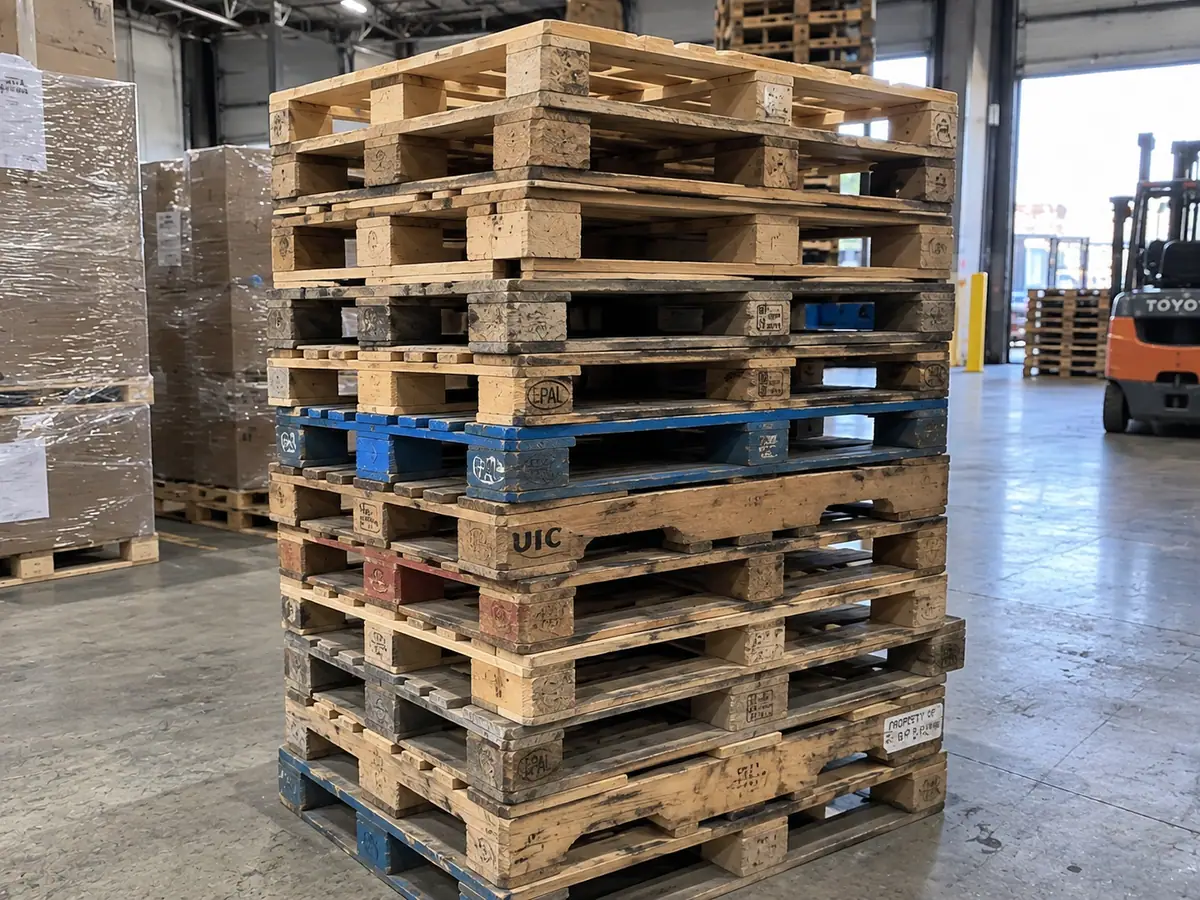
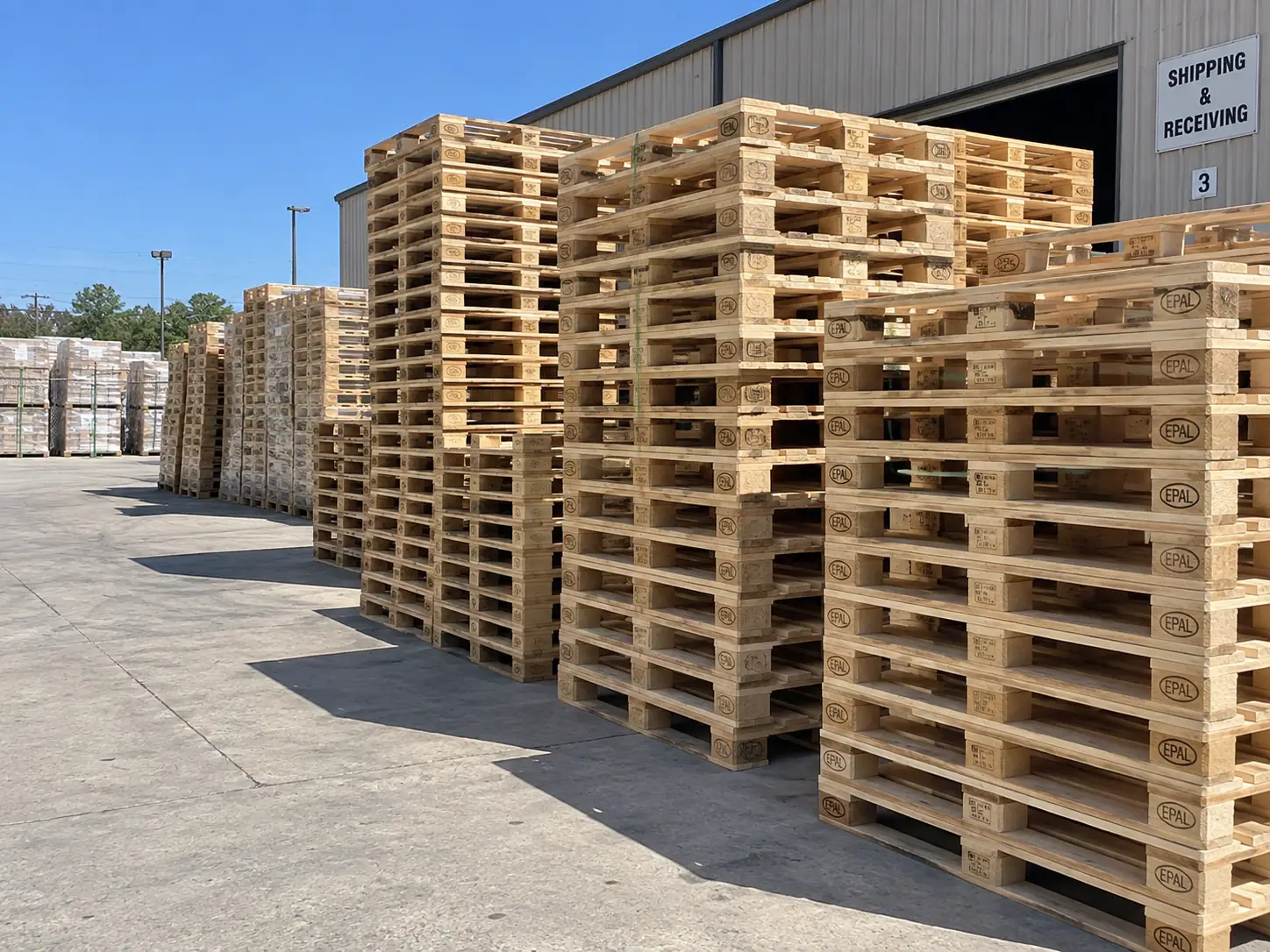
This company started in 2009 with a flatbed truck, a rented half-acre and a hand-written ledger. Seventeen years later there are thirty-one people, two grinders and a database.
It seemed worth writing down which parts of the work actually changed, because from inside it is less than you would think.
What has changed
- Reporting. In 2009 nobody asked where the wood went. Now it is one of the first questions from any customer of size, and answering it properly required rebuilding how we measure — weights rather than counts, reconciled monthly. That is the single largest change in the business.
- Grading standards are more published. More yards grade against a written definition than did fifteen years ago. Not all, but the direction is clear and it has been good for everyone.
- Automation downstream. AS/RS and high-speed conveyor systems have created a class of customer for whom recycled stock genuinely does not work, which did not really exist in 2009.
- Equipment. Grinders, screening, colour lines, heat treatment. All of it either did not exist here or was outsourced.
- Freight discipline. Fixed lanes instead of dispatched loads. This is why we can price delivered and why our carbon figures are what they are.
What has not
The grading itself. A person, a sort deck, and a four-way decision made in under three seconds — stringers, deck boards, footprint, moisture, in that order.
There are vision systems now that can catch some defects, and they are genuinely useful for consistency checks. None of them can make the judgement a grader makes, because the judgement is not really about defect detection. It is about predicting how a specific unit will behave over the next several years, and that is a different problem.
It still takes about eight months to train someone. We still start them on the repair bench, because you cannot judge a pallet until you have taken a few hundred apart. That was true in 2010 and it is true now.
The decision that mattered most
In 2012 we stopped selling companion-repaired stringer units as Grade A. It cost about eleven per cent of revenue and two of our five biggest accounts inside a quarter.
Both came back within eighteen months. One is still with us and buys about 90,000 units a year.
That is the entire strategic insight this company has ever had, and it is not a clever one: define the thing you are selling, then sell that thing. Everything else on this website — the published grading standard, the diversion figures with the bad number included, quoting in writing — is a version of the same idea.
We lost two accounts in a quarter and I genuinely did not know whether the business would survive it. What I did not expect was that both of them would come back and tell us the reason was that they had gone somewhere cheaper and could not tell what they were getting.
What we got wrong
We were slow on heat treatment. Export customers asked for four years before we registered a chamber in 2018. We sent that work elsewhere for no good reason other than not wanting the capital expense.
We under-invested in covered storage until 2013. Every wet autumn before that cost us grade and we treated it as weather rather than as a solvable problem.
We did not measure by weight until 2023. For fourteen years we reported counts and believed our own numbers, several of which turned out to be materially wrong when we finally weighed things.
None of those were subtle. All of them were visible at the time to anyone paying attention, which is a useful thing to remember about whatever we are currently getting wrong.
What the next decade probably looks like
More automation downstream, which continues to split the market between consistency-critical applications that need new or block pallets and everything else, which is most of it.
More reporting, and more of it audited rather than asserted. We think that is entirely good and it is the reason we published our methodology rather than only our conclusions.
And, we suspect, roughly the same job on the sort deck. Somebody looking at a pallet for three seconds and being right about it.