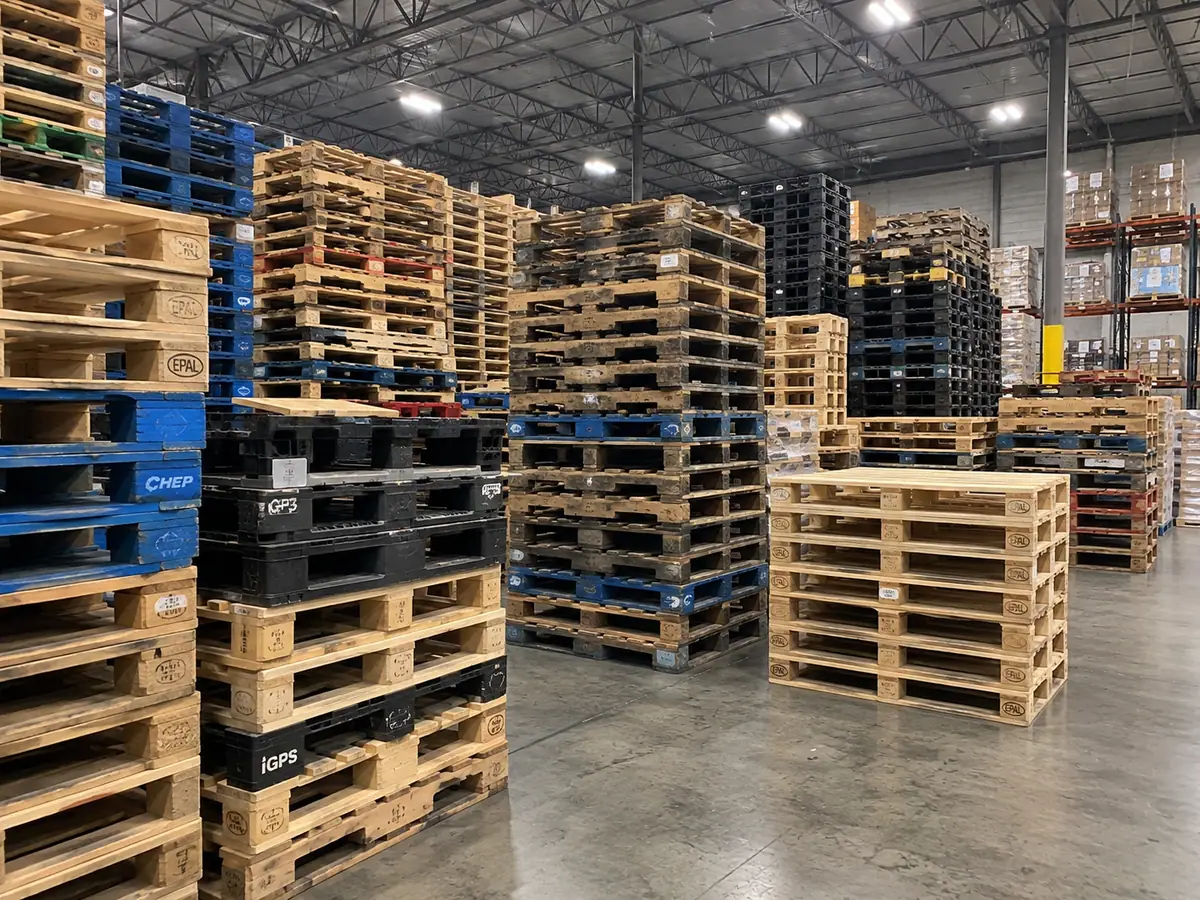
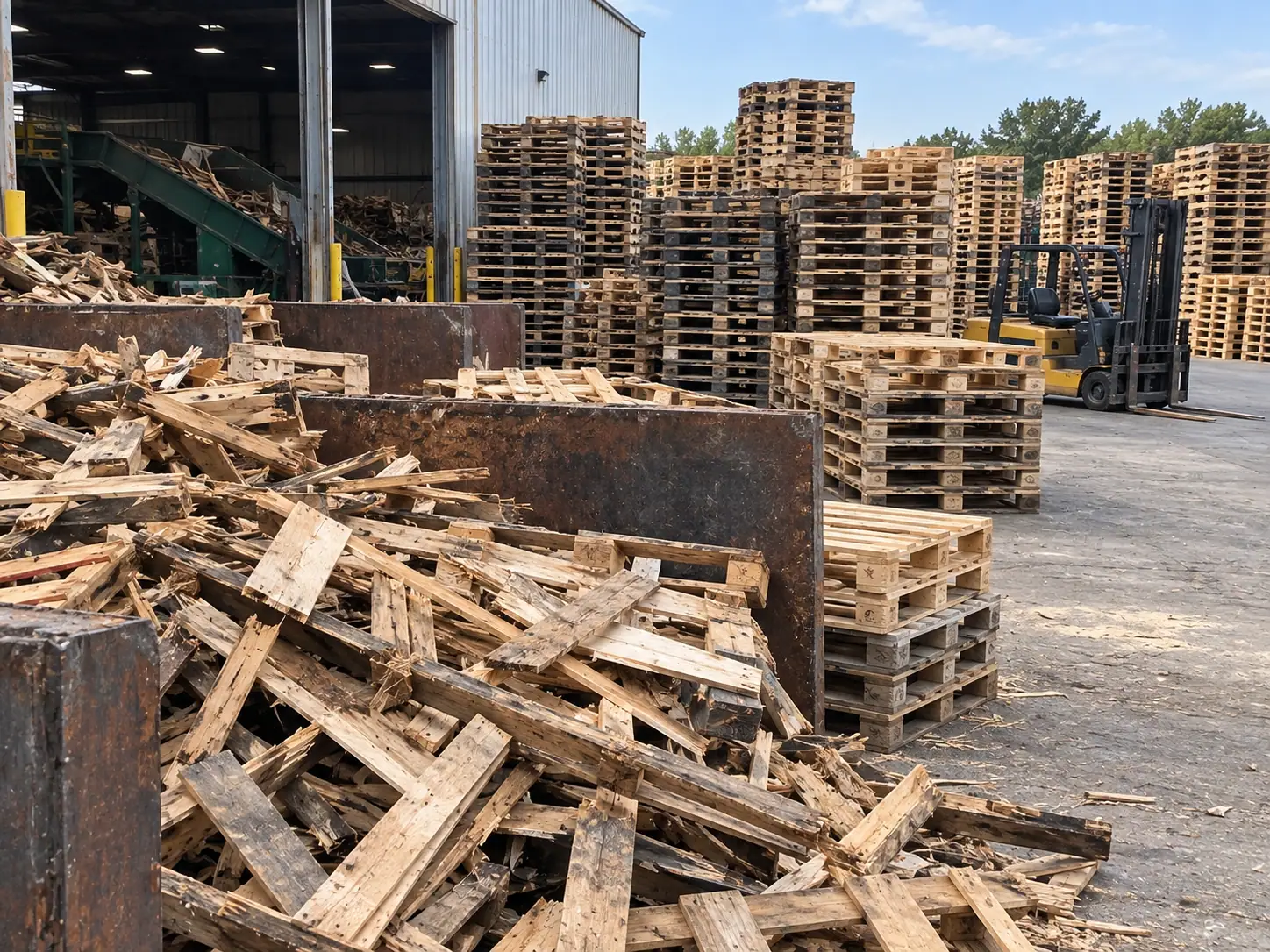
Ask anyone about pallet storage and they will talk about rain and snow. Winter is visible, and everyone takes it seriously.
A humid Midwestern July is quietly worse, and it is worse in a way that does not look like anything until the load gets rejected.
Why summer is worse
Wood reaches an equilibrium moisture content with the air around it. In a cold, dry January that equilibrium is low, and a stack sitting outside in freezing weather is not gaining much moisture — precipitation aside, the air simply does not hold enough water.
In an Ohio July at 80% relative humidity, the equilibrium is far higher. A stack does not need to be rained on to climb past 19%; it only needs to sit in the air.
Add warmth and you have the other half of the problem. Mould needs moisture and temperature, and summer supplies both. The same moisture content that sits inert in February grows visible mould in five days in July.
The tarp mistake
This is the one worth stating plainly: a tarp over an outdoor stack in summer is worse than no tarp at all.
It sheds rain, which is the intent. It also traps warm humid air against the wood, prevents any airflow, and creates a small greenhouse. We have opened tarped stacks in August and found mould on units that were dry when they were covered.
If you must cover, cover the top only, leave all four sides open, and lift the cover clear of the stack so air can move under it. Or better, do not cover — an uncovered stack in a dry week loses moisture, and a tarped one never does.
What actually works
- Indoors. Nothing else is close. Even an unheated shed with airflow is dramatically better than the best outdoor arrangement.
- Under a roof with open sides. Rain protection plus airflow. This is what our covered sort deck is and it changed our grade mix more than any machine we have bought.
- Off the ground, always. Two lengths of scrap timber under a stack stops moisture wicking up from concrete or dirt. It costs nothing and it is the most commonly skipped step.
- Deck boards horizontal. Stack so water runs off rather than pooling in the gaps between boards.
- First in, first out. Rotate. The stack in the corner that has been there since March is the one that will fail a grade check.
What it is worth
A load of dry Grade A cores and the same load at 22% moisture are not the same product. The wet one cannot go straight back into service, cannot be repaired without drying, and frequently cannot be graded at all — it moves at grind value.
For a site generating a few hundred pallets a week, the difference between selling dry cores and selling wet ones runs into thousands of dollars a year. Against that, covered storage is not an expensive intervention.
It is also the least interesting recommendation on this website, which is probably why it gets ignored.