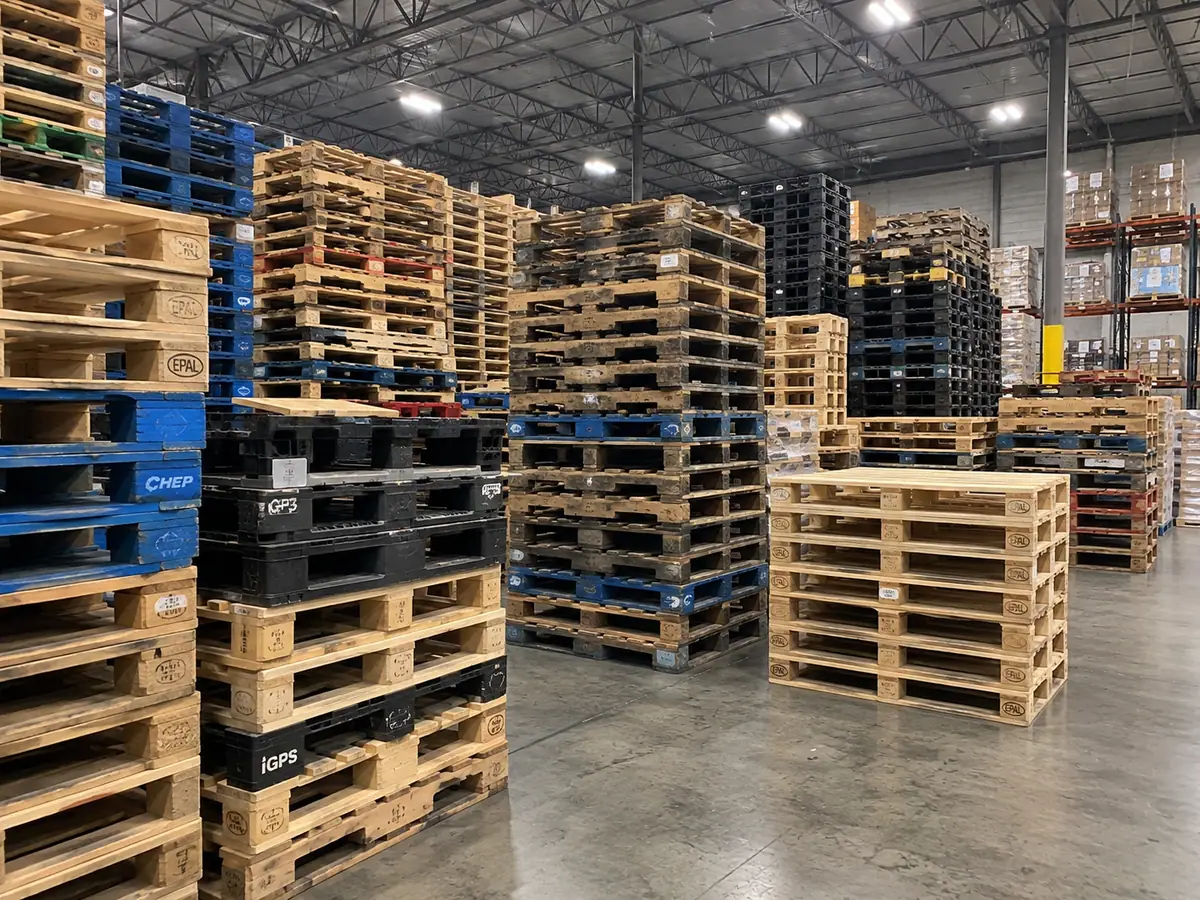
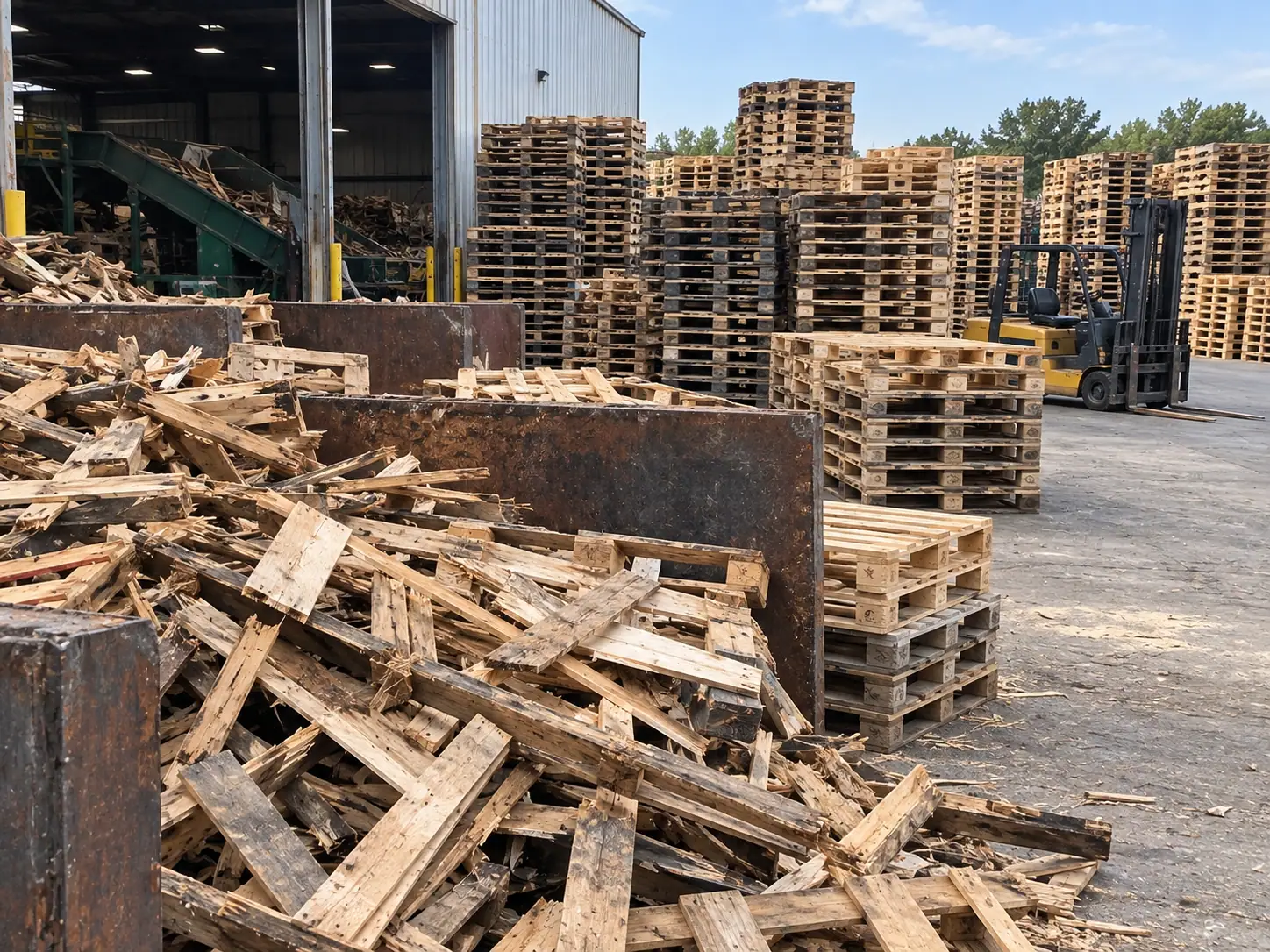
Ask a buyer what makes a pallet good and you will hear about deck boards and stringers. Ask a grader and moisture will come up in the first sentence.
It is the least visible property of a pallet and one of the most consequential, and it is the single most common reason a load that looked fine on the seller's yard gets rejected at the buyer's.
What the number means
Moisture content in wood is expressed as the weight of water as a percentage of the oven-dry weight of the wood. A board at 20% moisture content is one-fifth water by dry weight.
Freshly sawn hardwood can be 60% or more. Air-dried lumber settles somewhere in the teens depending on climate and season. Kiln-dried construction lumber is typically 15 to 19%. A pallet that has spent three years indoors in a heated building will be lower still, sometimes single digits.
The practical threshold across the pallet trade is 19%. Below it, wood is stable and does not support mould growth. Above it, both of those statements stop being true fairly quickly.
Three things that go wrong above 19%
Mould. This is the one that generates phone calls. Wood above about 20% moisture, wrapped in plastic film in a warm warehouse, will grow visible mould in under a week. It is usually surface mould and usually harmless, and it is also completely unacceptable to any food, pharmaceutical or retail customer, which means the load comes back.
Strength. Wood loses stiffness as moisture rises. The relationship is not dramatic in the range we are discussing, but it is real, and it stacks with everything else that reduces a used pallet's capacity. A damp Grade A pallet in a rack is not carrying what the specification says.
Weight. A 45 lb pallet at 15% moisture becomes a 52 lb pallet at 28%. On a 330-unit trailer that is an extra 2,300 lb of water you are paying freight on, and if you are close to a weight limit it matters.
How it is measured
A pin-type moisture meter, pressed into the face of a deck board, which measures electrical resistance between two pins and converts it. It takes about two seconds and costs less than a good drill.
We take three readings per unit on anything questionable — two on the top deck, one on a stringer — because moisture is not evenly distributed. A pallet that has been rained on and then partially dried in sun will read fine on the top face and be well over the limit underneath.
The reading is temperature-dependent. A frozen pallet reads low and misleadingly so, which is why anything received in winter gets checked after it has come up to yard temperature rather than straight off the trailer.
Storage, which is the whole answer
There is no economic way to dry a wet pallet. Kilning them is possible and costs more than the pallet is worth. Air drying takes weeks and requires the space you did not have, which is why they were outside in the first place.
So the entire practical answer is upstream: keep them dry in the first place. Indoors is best. Under a roof on dunnage, with airflow, is nearly as good. Outdoors under a tarp is worse than outdoors uncovered, because a tarp traps moisture against the wood and creates exactly the conditions mould wants.
A stack sitting directly on the ground wicks moisture up from below regardless of the weather. Two lengths of scrap timber underneath solves it for nothing.
- Indoors, or under a roof on dunnage with airflow
- Never directly on the ground
- Never sealed under a tarp — it traps moisture rather than shedding it
- Stack with the deck boards horizontal so water does not pool in the gaps
- First in, first out, so nothing sits through a whole wet season
Why this shows up in the price
A load of dry cores and a load of wet cores are not the same product, and the price gap is larger than most sellers expect. Wet units cannot go straight back into service, cannot be repaired without drying, and frequently cannot be graded at all.
In practice a wet load moves at grind value, which is a fraction of core value. That is not a negotiating position — it is what the material is worth once it has lost its grade.
Which makes covered storage one of the highest-return investments available to anyone generating pallets. It is boring, it is not a machine, and it changes the economics more than anything you could buy.