Selling guide · 9 min read
How to sell used pallets for what they are actually worth.
Last reviewed January 2026 · Written by the RePallet USA yard team
Ask us about anything on this page
These guides are written by the people who grade the pallets. If something here does not match your situation, tell us in the message field.
- Written quotes, usually inside one business day
- Loads from 100 pallets to full 53' trailers
- We buy as readily as we sell — tell us which way it flows
Outbound
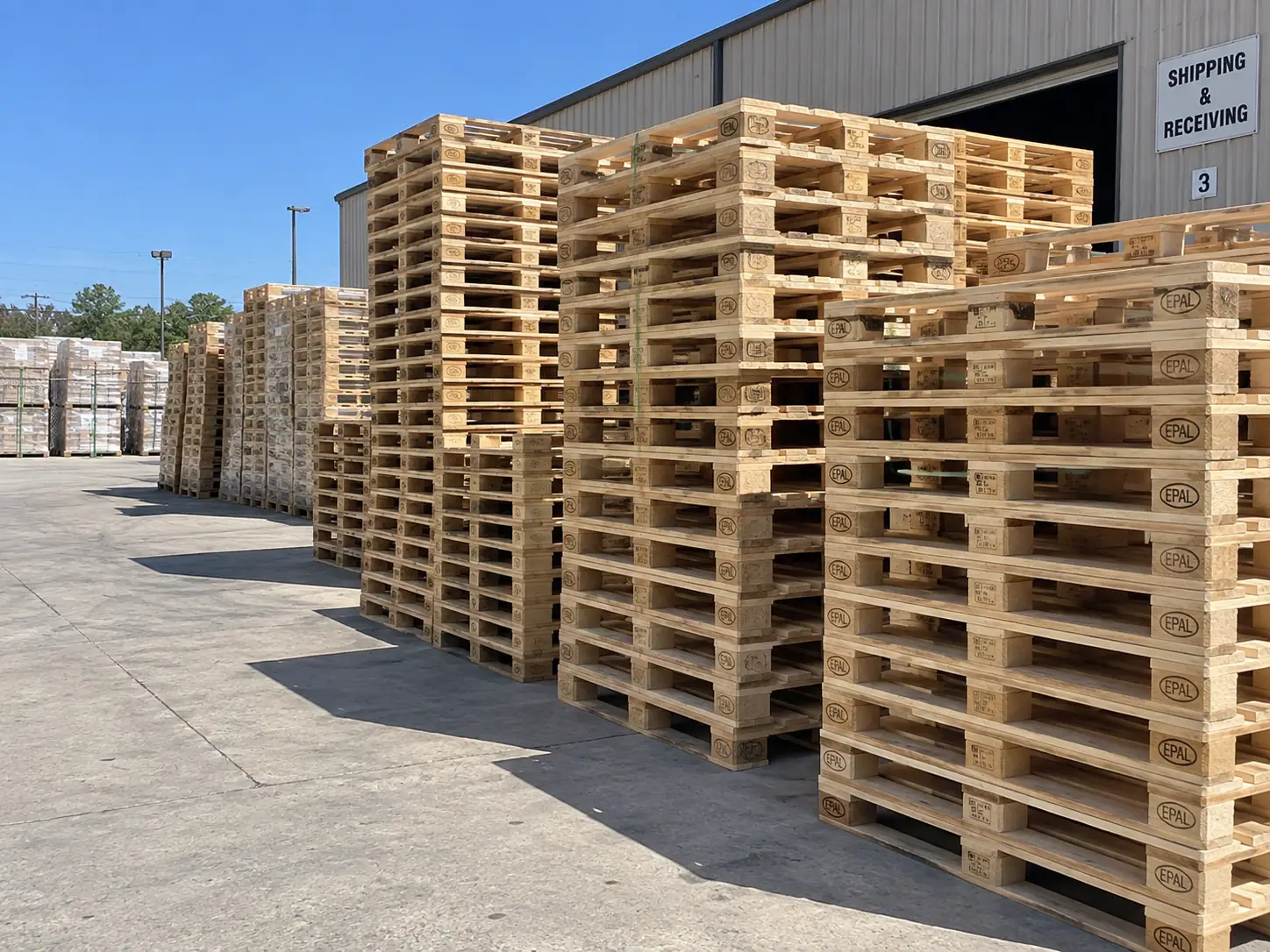
Banded, counted and staged against the door. Stacks of fifteen, double-banded, the way a forklift expects them.
First principles
What a buyer is actually valuing
A pallet buyer is not buying a pallet. They are buying an option on four outcomes: sell it as-is, repair it and sell it, dismantle it for lumber, or grind it. Each outcome has a different value, and the price they offer is a weighted average of what they expect your load to contain.
That is why the shape of a load matters more than its size. A trailer that is 95% whole 48×40 cores has one likely outcome and gets priced against it. A trailer with 15% odd sizes and 20% broken units has four outcomes and gets priced against the worst realistic case, because the buyer is absorbing the sorting risk.
The entire art of selling pallets well is removing that risk before the truck arrives.
The method
Four things to do before you call anyone.
- Step 01
Separate 48×40 from everything else
This is the single highest-return activity available to you. GMA cores are the liquid product; everything else is a discount. Two people and a forklift for an afternoon routinely adds 20 to 30% to a trailer's value.
If you do nothing else, do this.
- Step 02
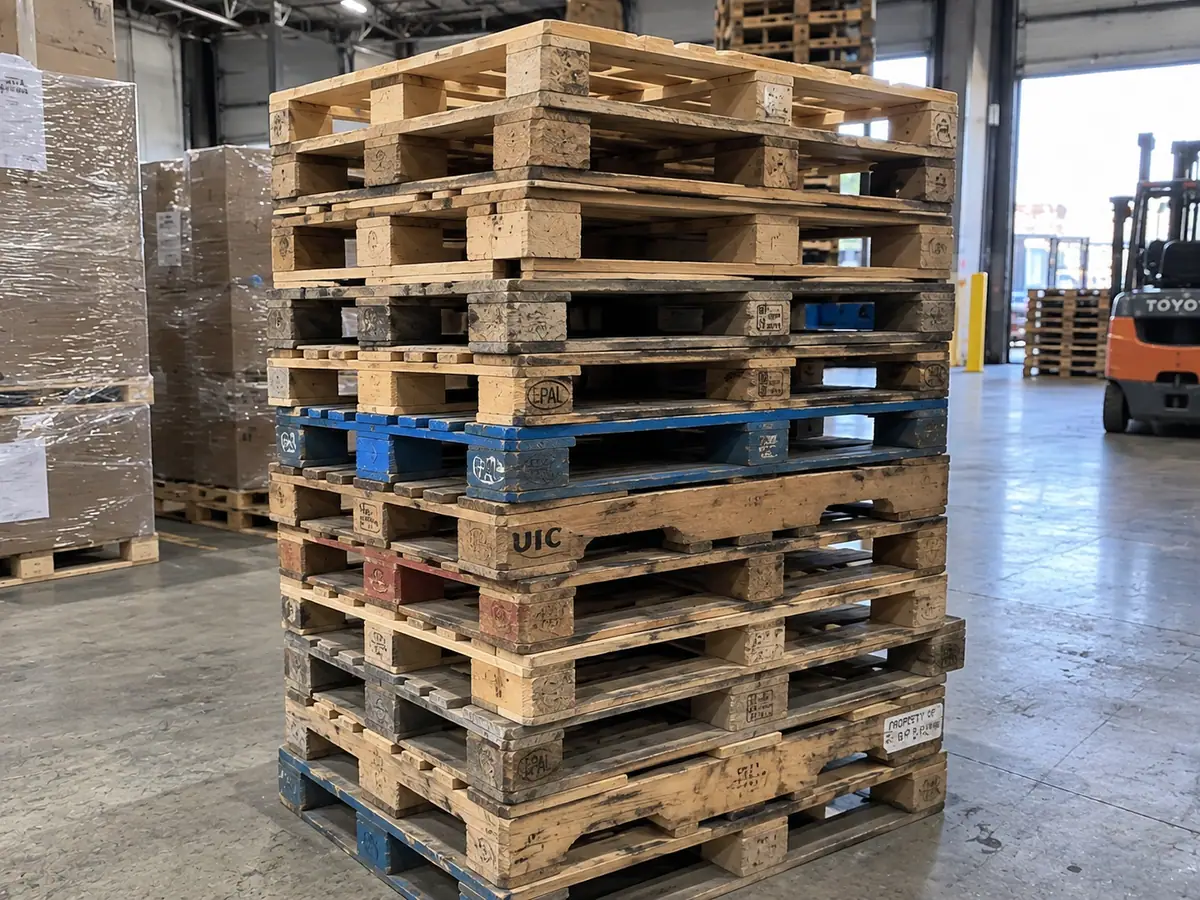
Pull the obviously broken ones
Units with cracked stringers or missing deck boards. Stack them separately and price them separately. Mixing them into a good load drags the whole average down.
They still have value — just a different one.
- Step 03
Get them under cover
Wood above roughly 19% moisture loses a grade, gains weight and can grow mould in a week under a tarp. Indoors is best; under a roof on dunnage is acceptable; open yard is where money goes to die.
Rain is the most expensive thing that happens to pallets.
- Step 04
Count and photograph
One clear photo of a representative stack plus an approximate count is enough for any serious buyer to quote. Vague descriptions get conservative prices, because conservatism is how a buyer manages uncertainty.
A photo beats a paragraph every time.
Grading yourself
How to sort a stack the way a buyer will
| Look at | Whole core | Repairable | Damaged |
|---|---|---|---|
| Stringers | No cracks visible on any face | Hairline crack, no separation | Cracked through or broken |
| Top deck boards | All present, none split | One or two broken | Three or more missing |
| Bottom boards | All present | One missing | Two or more missing |
| Footprint | Full 48 × 40 | Full 48 × 40 | Any size |
| Moisture | Dry to the touch, light | Dry | Wet, heavy, dark |
| Indicative value | $4.00 – $6.00 | $2.25 – $4.00 | $1.50 – $2.50 |
Mistakes
Three ways sellers lose money on pickup day
- 01Accepting a verbal priceA number given over the phone before anyone has seen the load is not a quote; it is an opening position. Get it in writing, with the grade definitions attached, before the truck is dispatched.
- 02Letting the count be settled after the factCount together on the dock and sign a ticket. A count reconciled at the buyer's yard, out of your sight, is a count you cannot dispute.
- 03Selling branded or pooled palletsBlue, red, brown and branded units are almost always the property of a pooling company. Selling them is a legal problem and a reputational one. A legitimate buyer will sort them out and return them; see pooling vs buying.
Questions
Selling questions
How many pallets do I need to make a pickup worthwhile?
Around 200 units makes the freight stand on its own. Below that, ask anyway — buyers routinely have trucks routed past your door and adding a stop costs them little.
Should I sell to a broker or a recycler?
A recycler owns the downstream outcomes and can therefore usually pay more for mixed loads. A broker may pay more for a clean, single-size load because they have a specific buyer. Get both quotes if you have the time.
What if my pallets are worthless?
Then a good buyer will tell you so and quote removal instead — typically $95 to $180 per trailer in central Ohio, which still beats landfill tipping plus your own freight. See pallet pickup and removal.
Can I get paid on the spot?
For one-off clean-outs above about 400 units, usually yes. Ongoing arrangements normally settle on standard terms.
What are my odd-sized pallets worth?
Less than 48×40, and the spread is wide — whole units in a non-GMA footprint typically fetch $0.75 to $3.00 each, depending on how common the size is and whether there is a buyer for it that week. Stack them separately regardless. Mixed into a GMA load they pull the whole average down by considerably more than they are worth on their own.
Send a photo and a count.
That is genuinely all we need to give you a real number, including the number zero when that is the honest answer.