Custom pallet builds are good business for us. The margin is better than recycled stock, the orders repeat, and the customer is locked into the specification for years.
Which is why it is worth being explicit: most of the custom pallets we are asked to quote should have been standard ones, and we will usually say so before we send a price.
The visible cost is the small one
A custom footprint typically prices 15 to 30% above the equivalent standard size, because the run is shorter, the setup is amortised over fewer units and the lumber cannot be cut to the most efficient pattern.
That is the number that appears on the quote, and it is the least important one. The costs that actually hurt arrive later and never appear on any invoice at all.
The four costs that do not appear on the quote
- No spot market. Run short in April and you cannot buy a hundred units from anyone. You wait for a production run, or you improvise, and improvising with pallets means damage.
- No pooling or exchange. Every pallet pool and every exchange arrangement in North America is built on standard footprints. A custom size is outside all of them by definition.
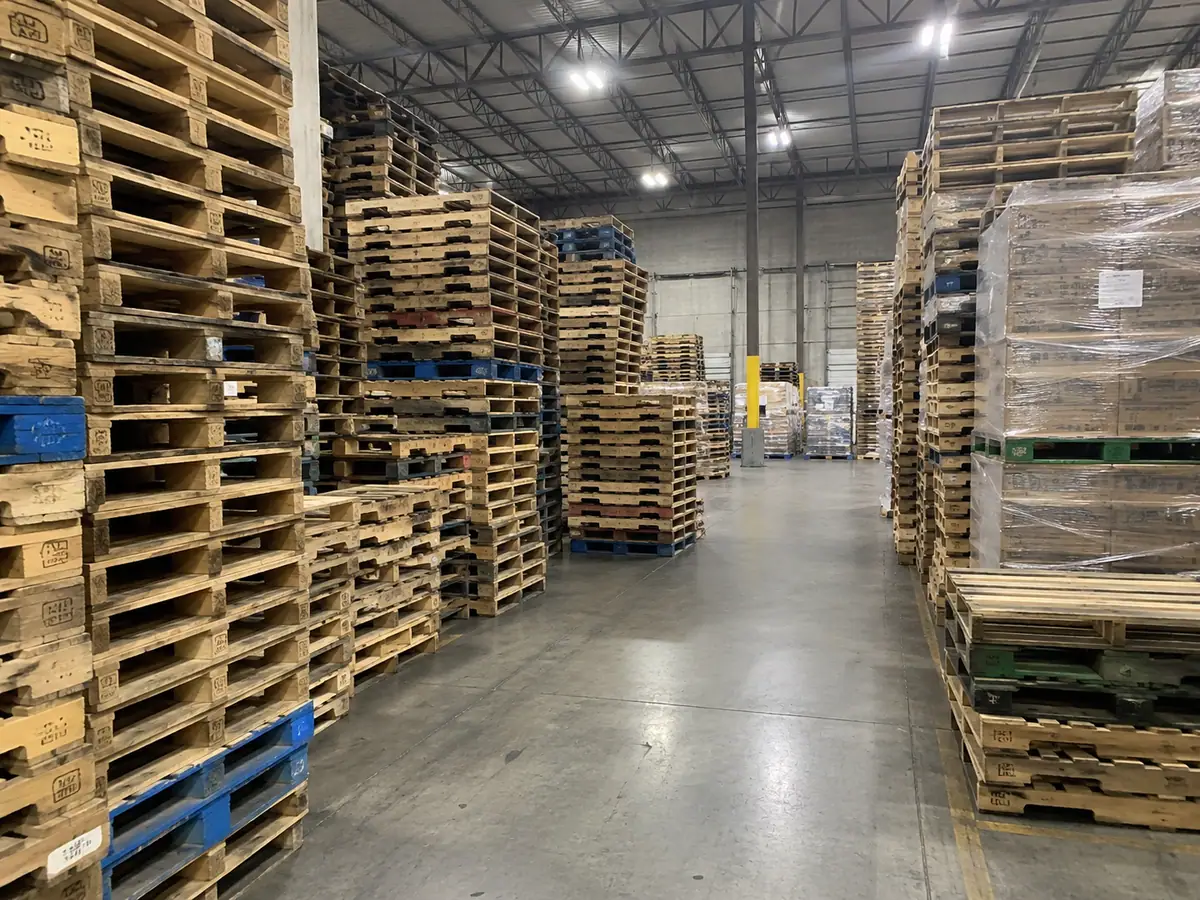
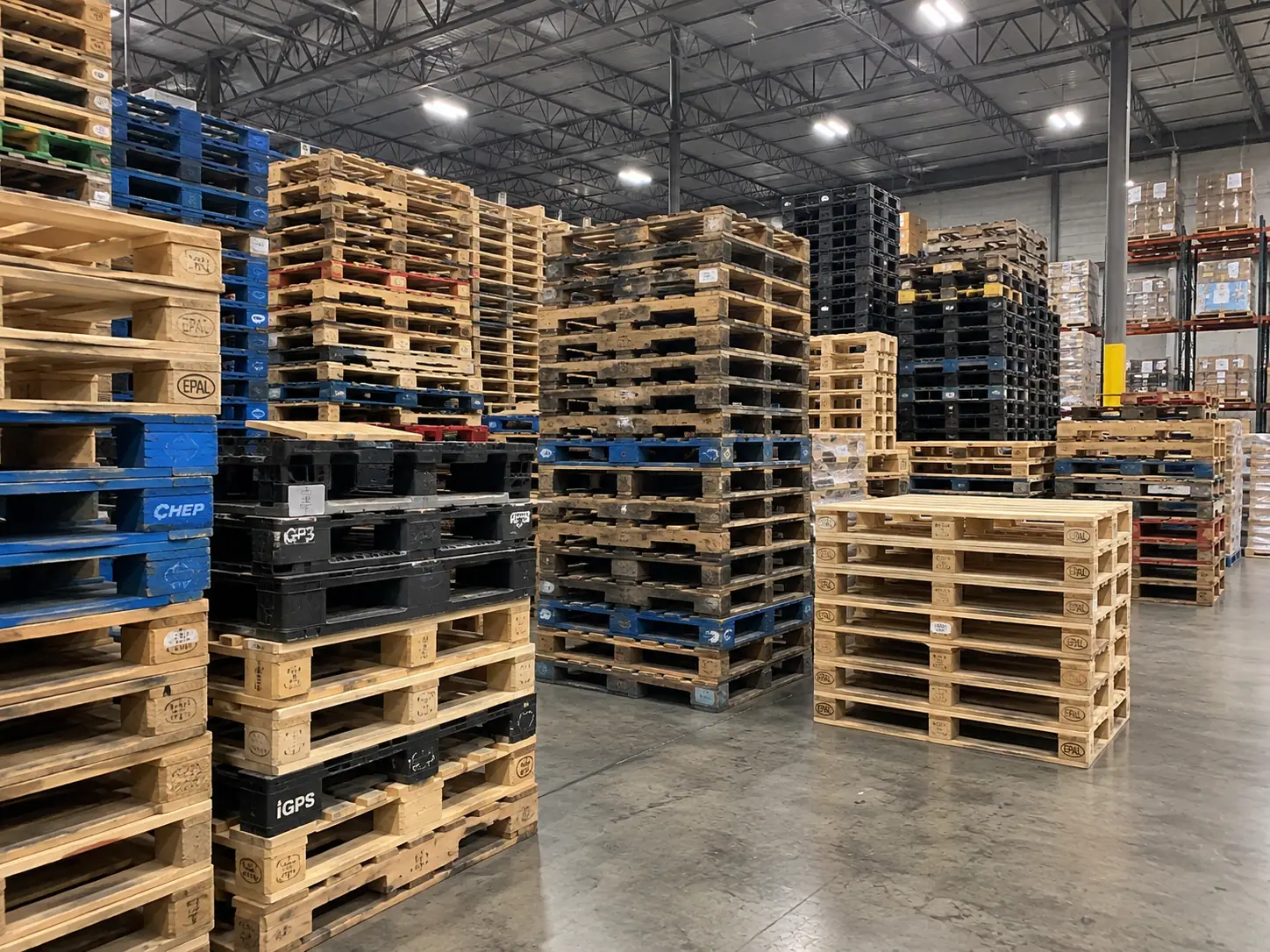
- Poor end-of-life value. A 48×40 core is the most liquid used pallet in the country and prices accordingly. A custom footprint at end of life is worth what its lumber is worth, which is a fraction.
- Everyone downstream has to be told. Every 3PL, every carrier, every new customer, every racking supplier, forever. That is not a cost you can point at, but it is real and it compounds.
Four things to try first
Change the case, not the pallet. This is the one that works most often and gets suggested least. A small adjustment to case dimensions can frequently make a load tessellate cleanly onto a 48×40 with no overhang at all. It is a packaging engineering question, and it is usually cheaper to solve there.
Change the pattern. Pinwheel, column, brick, block — the same cases arranged differently often fit a standard footprint. Free to try.
Accept slightly less per layer. We hear 'we lose two cases per layer' as a justification for a custom size more often than anything else. Two cases per layer rarely justifies a decade of illiquidity. Do the arithmetic across ten years before you accept the premise.
Use a standard size from somewhere else. A 1200×1000 mm or a 48×45 is non-standard for you, but it is standard somewhere, which means it is buyable, poolable and resellable. That is a very different proposition from a bespoke rectangle.
When custom is genuinely correct
There are cases where the argument above does not apply, and in those cases we build without hesitation.
Product that physically does not fit: extrusions, glass, pipe, sheet stock, machinery. Overhang is the leading cause of edge damage in transit and no amount of stretch wrap fixes a load hanging over the deck.
Very heavy or concentrated loads, where deck spacing and stringer count are engineering decisions rather than shopping ones. Automated handling with millimetre tolerances. Export crating, where the pallet is part of a sealed, marked, one-way assembly. And retail display bases built to a planogram, where the customer sees the pallet and appearance is functional.
If you are going custom, do it properly
Measure the assembled unit load, not the product. Cases, slip sheets, corner boards and wrap included, measured on a real pallet rather than taken from a drawing.
Check the destination before the origin. Racking beam length, conveyor width, trailer door, and the receiver's pallet policy. A footprint that works in your building and jams at your customer's has failed.
Decide the load case — static, dynamic or racked — before you specify any members. Racked and edge-supported is the demanding case and it drives everything else. Deck board thickness and stringer dimension are the last decisions, not the first.