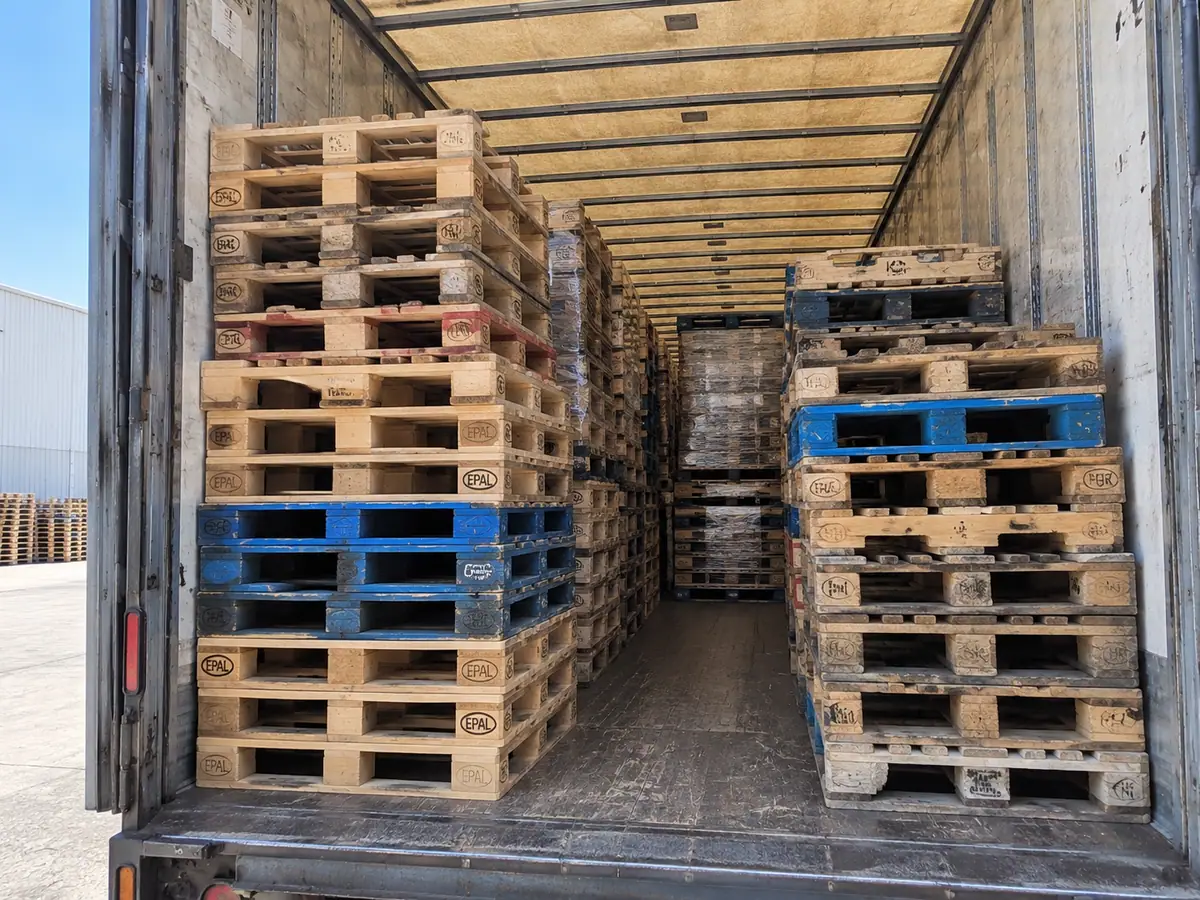
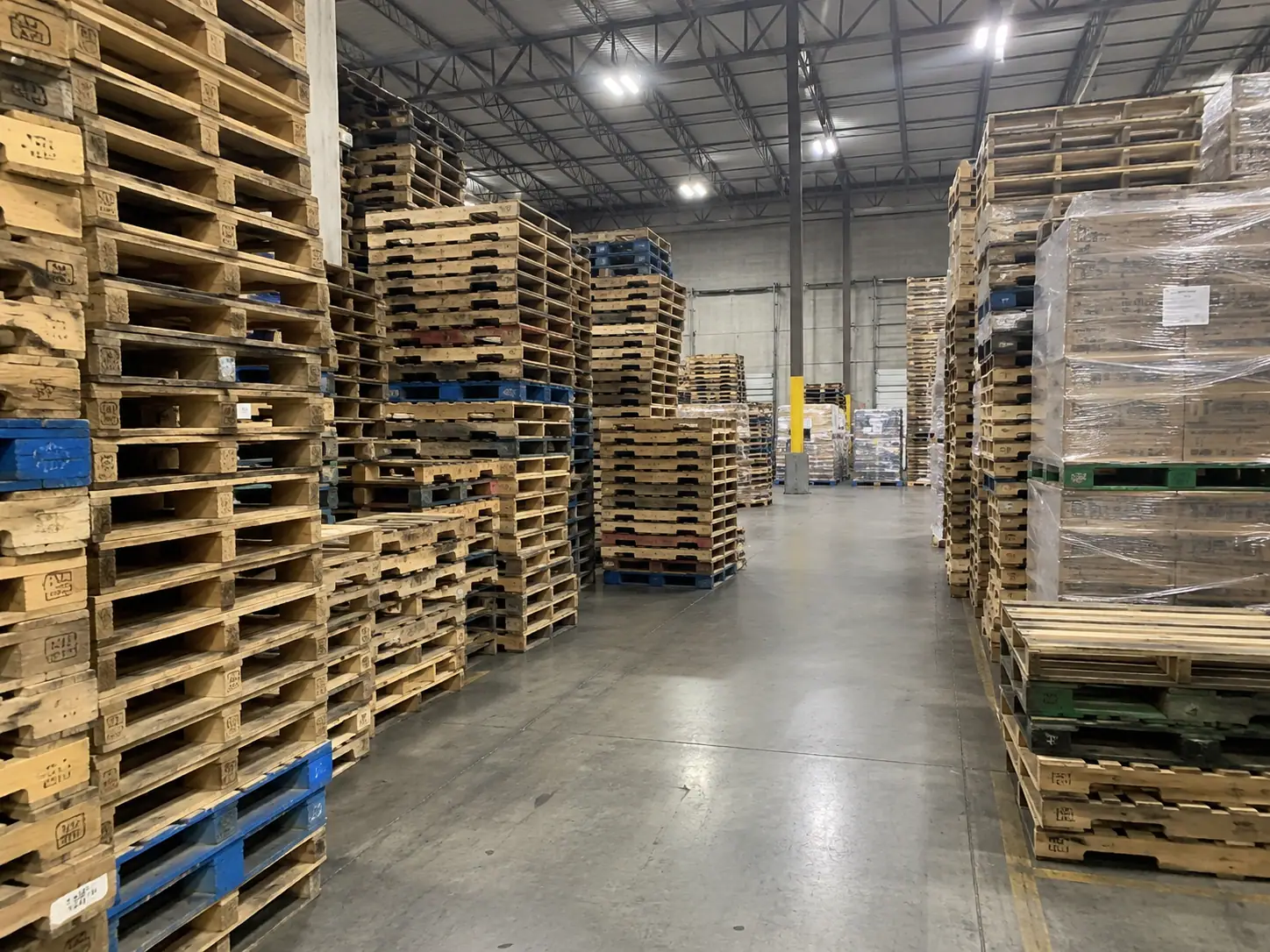
Every December we publish the year's numbers, including the parts we would rather not. This is the third time we have done it and it does not get more comfortable.
All figures are by weight from the truck scale, reconciled monthly, with the variance stated rather than allocated away.
The headline numbers
| Measure | 2023 | 2024 | Change |
|---|---|---|---|
| Pallets received | 1.38 M | 1.50 M | +8.7% |
| Graded units shipped | 812,000 | 868,000 | +6.9% |
| Units dismantled | 372,000 | 412,000 | +10.8% |
| Wood ground, tons | 8,900 | 9,800 | +10.1% |
| Ferrous recovered, tons | 151 | 164 | +8.6% |
| Landfilled, tons | 142 | 108 | −23.9% |
| Diversion by weight | 97.9% | 99.1% | +1.2 pts |
What moved the diversion number
The second grinder and the colour line, commissioned in the spring. Before that, we were periodically grinder-constrained: material that should have been fibre sat waiting, and a proportion of it got wet enough while waiting that it went to disposal instead.
The colour line also opened a municipal landscape market that absorbs a much larger share of what the sort deck rejects. Dyed mulch sells reliably in volumes that natural mulch does not, and that changed the economics of grinding marginal material.
The residual 0.9% is treated and contaminated wood. We have no credible plan to reduce it further without refusing difficult material, which would move the problem rather than solve it.
What went well
- Repair share up. 27.4% of intake was repaired and returned to service, against 24.1% in 2023. Better dismantling throughput fed the bench more consistently.
- Mis-grade rate down. Our internal re-check found a mis-grade in about one unit in 640, against one in 520 in 2023. Two new graders came fully up to speed.
- Programme customers up to 38% of volume. Which smooths the seasonal peak and is the main reason we could commit fixed pricing through spring.
- No claims escalated. Eleven grade disputes, all resolved by replacement or credit within five business days.
What did not
We ran short in April. Despite building inventory through December, Grade A ran out in the second week of April and stayed out for eleven days. Programme customers were served; spot customers were not, and several of them were not happy about it. The honest answer is that we under-built inventory by roughly 40,000 units.
The colour line was three months late. Commissioning problems, some of them ours. It cost us most of the spring mulch season in its first year.
Reconciliation variance widened. 1.4% for the year against 1.1% in 2023, most of it in the summer months. Some of that is genuine moisture loss in a hot season; some of it is that we were running the grinders harder and weighing the output less carefully. That is on us and it is a 2025 job.
For 2025
Build more inventory before spring — the April shortfall was expensive in goodwill and entirely self-inflicted. Tighten the outbound weighing discipline so the variance comes back under 1%. And keep pushing the repair share, which is the outcome with the best environmental and commercial return simultaneously.