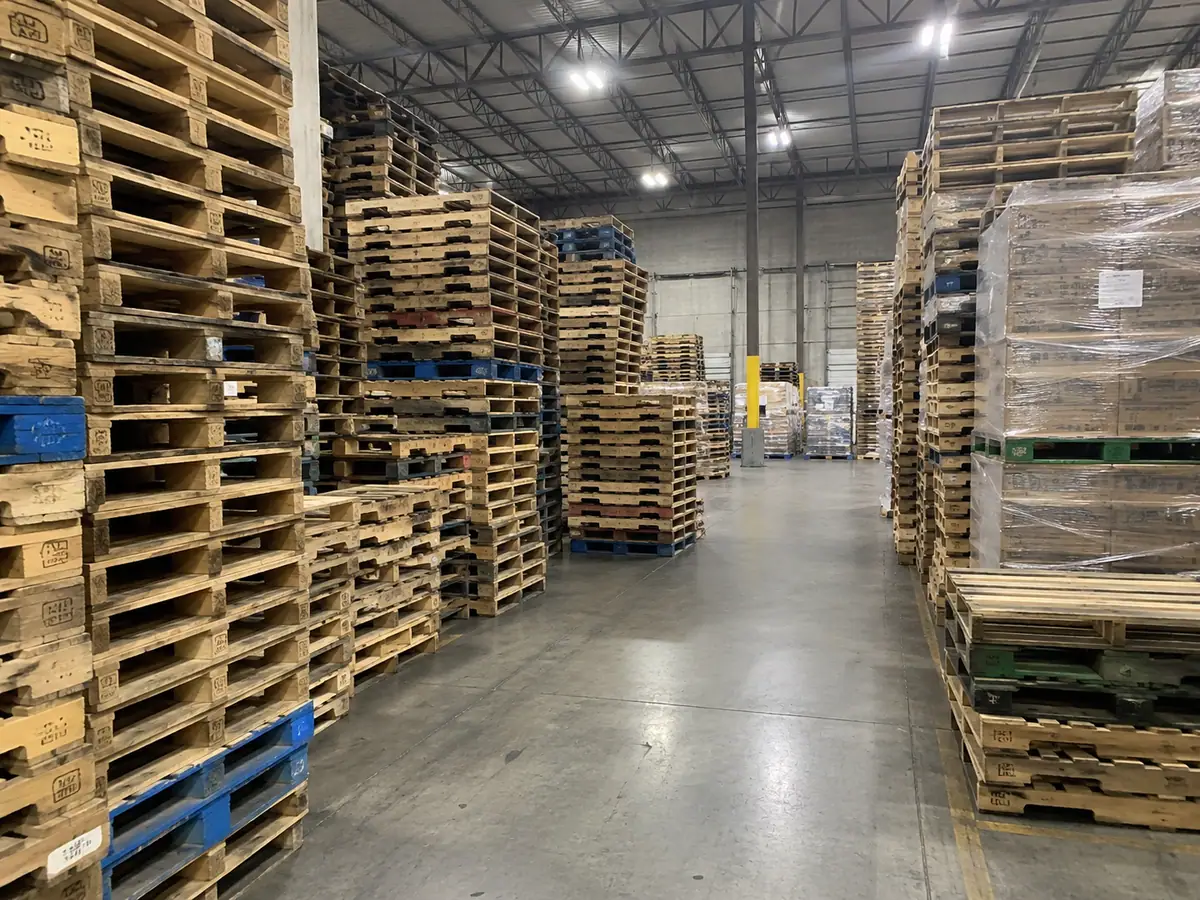
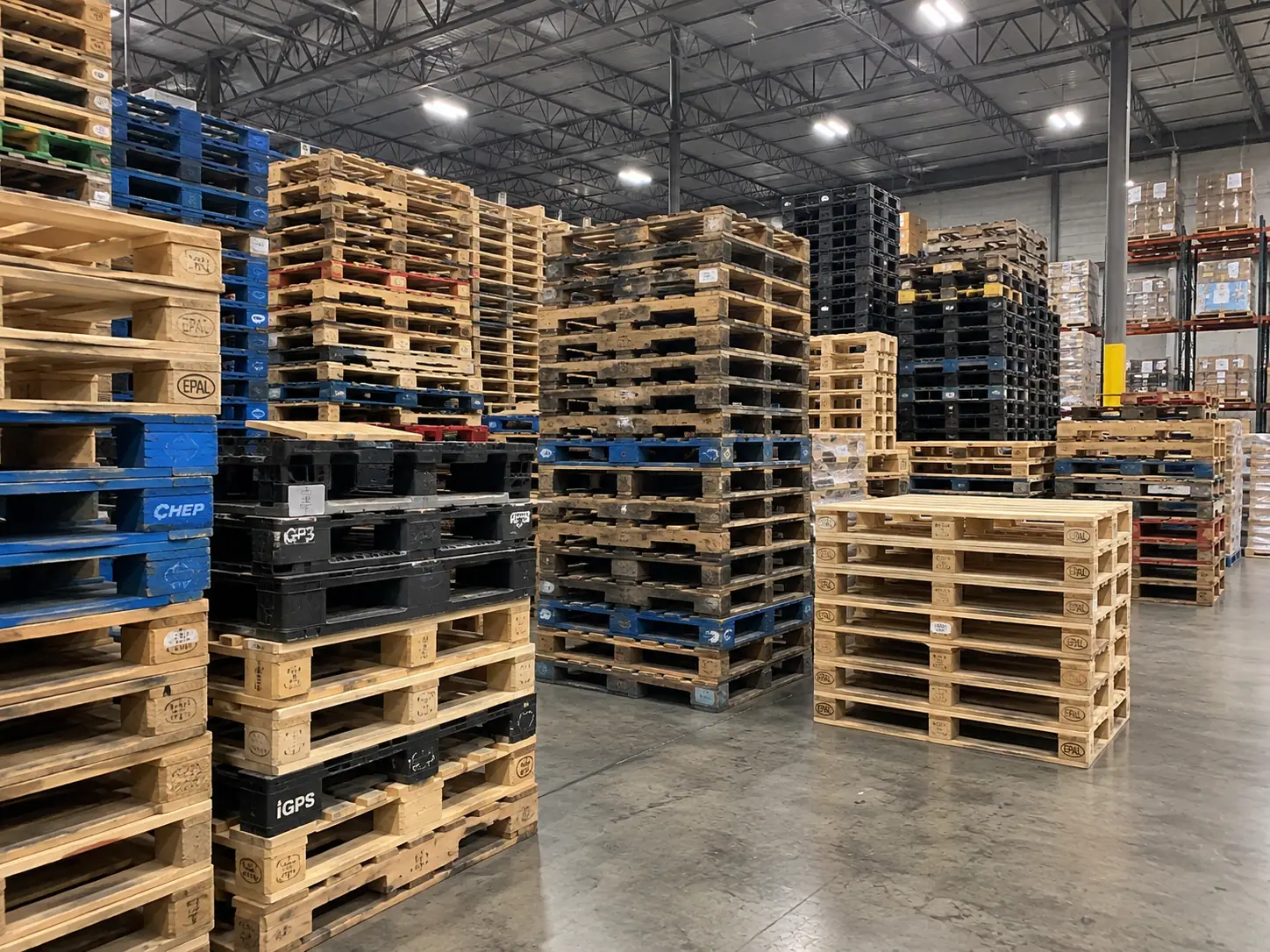
Every damaged pallet is a record of what happened to it. The pattern of damage across a population is a diagnostic, and almost nobody reads it.
Spend twenty minutes at your damaged-pallet stack sorting by failure type. It will tell you something about your operation that no report will.
Lead board broken or missing
The outermost deck board at one or both ends. By far the most common damage there is.
Cause: forklift entry. Tines striking the lead board rather than entering the opening cleanly. It is a technique and spacing issue, and it concentrates around specific operators and specific equipment.
If it is one end only, look at which side loads are approached from. If it is both ends, look at fork spacing — tines set too wide catch the boards on entry.
Stringer cracked at mid-span
A crack running from a nail hole toward the centre of the stringer's length.
Cause: bending. Which means racking, or a load heavier than the pallet is rated for, or a concentrated load on a rating that assumed distribution.
If it is widespread, your racked loads are exceeding what your pallets carry. That is a specification problem, not a handling problem, and it is the failure mode with actual safety consequences.
Notch broken through
The fork notch in an outer stringer broken down to the bottom deck.
Cause: forks entering at an angle, or a tine catching the notch edge and levering. Usually a technique issue and often a sightline issue — an operator who cannot see the opening well approaches optimistically.
This is the damage most likely to produce a catastrophic failure later, because the notch is already the weakest point of the stringer.
| Damage pattern | Likely cause | Where to look |
|---|---|---|
| Lead board broken | Forklift entry technique | Operator training, fork spacing |
| Stringer cracked mid-span | Racked overload | Load weights, pallet grade specification |
| Notch broken through | Angled fork entry | Sightlines, aisle width, training |
| Corner crush | Rack post contact | Aisle width, rack protection |
| Bottom board missing | Pallet jack damage | Missing chamfers, floor condition |
| Widespread splitting | Moisture cycling | Outdoor storage |
| Nails pulled through deck | Clamp handling | Clamp pressure settings |
| Uniform greying and softness | Weather exposure | Storage, not handling |
The ones that are not handling
Widespread splitting along the grain is moisture cycling — wood repeatedly wetting and drying. That is a storage problem and no amount of operator training fixes it.
Uniform greying with soft surfaces is straightforward weather exposure. The pallets are living outside and losing grade continuously.
Nails pulling through the deck usually means clamp handling rather than forks — a clamp truck squeezing a load hard enough to lift the deck off the stringers.
What to do with the diagnosis
Sort a hundred damaged units by failure type. If more than half are lead board damage, you have a training and spacing issue worth an hour of somebody's time. If stringer cracks dominate, you have a specification issue and should be buying up a grade.
The value is that these are different problems with different fixes, and a generic 'we damage a lot of pallets' conversation produces neither.
It is also worth tracking over time. A rising damage rate is telling you something changed — a new carrier, a new operator, a new racking configuration — and the pallets noticed before the reports did.