When freight volumes fall, the used pallet market loosens. Prices soften, lead times shorten and the spring squeeze is milder. That much is intuitive.
What is less intuitive is that grade quality falls at the same time, for reasons that are worth understanding before you assume a soft market is straightforwardly good news.
Why supply loosens
Core supply is a function of distribution activity — pallets become available when somebody finishes with them. Less freight moving means fewer new pallets consumed, but it also means existing pallets circulate less and sit longer.
The net effect in the downturns we have traded through has been more available cores relative to demand, and softer prices. In late 2023 core acquisition prices in our region fell roughly fifteen per cent from their spring level.
Why quality falls
Two reasons, and both are second-order.
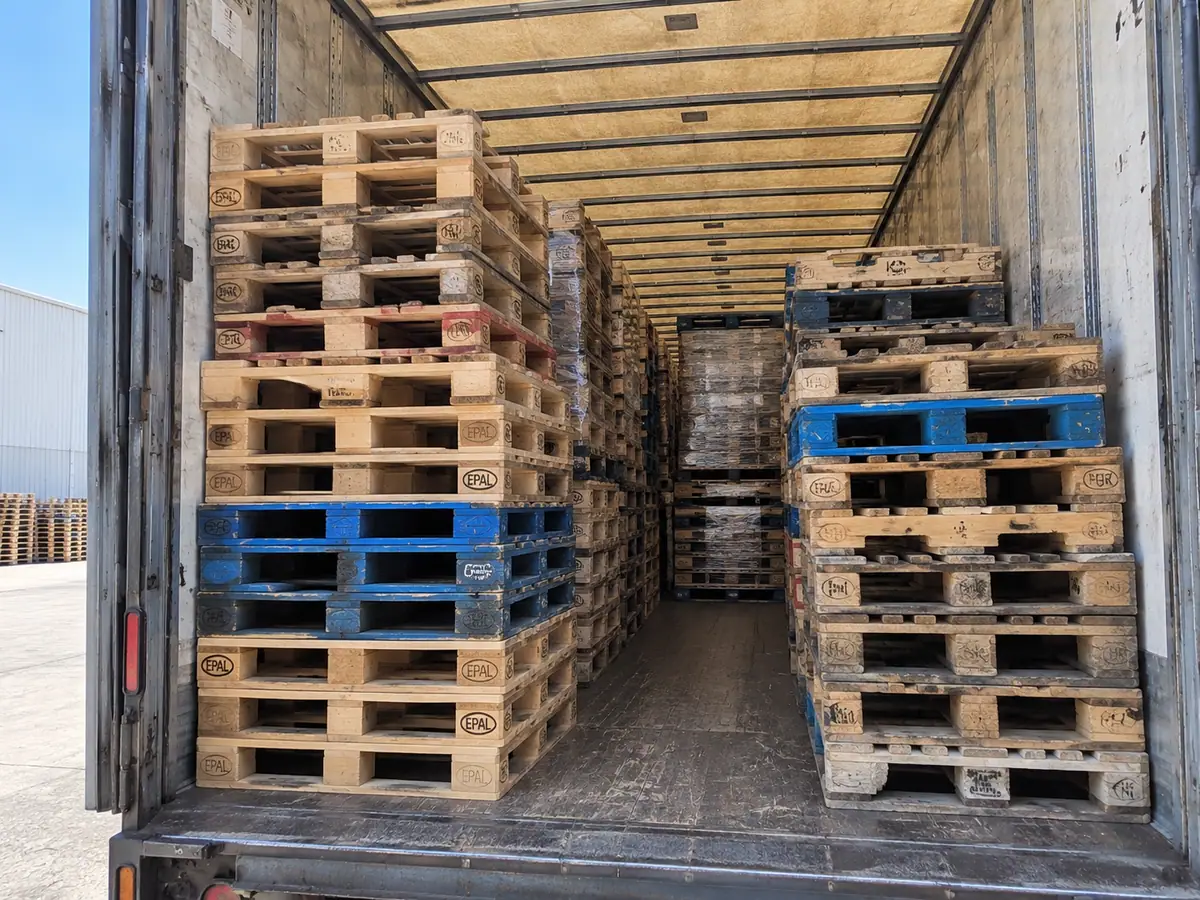
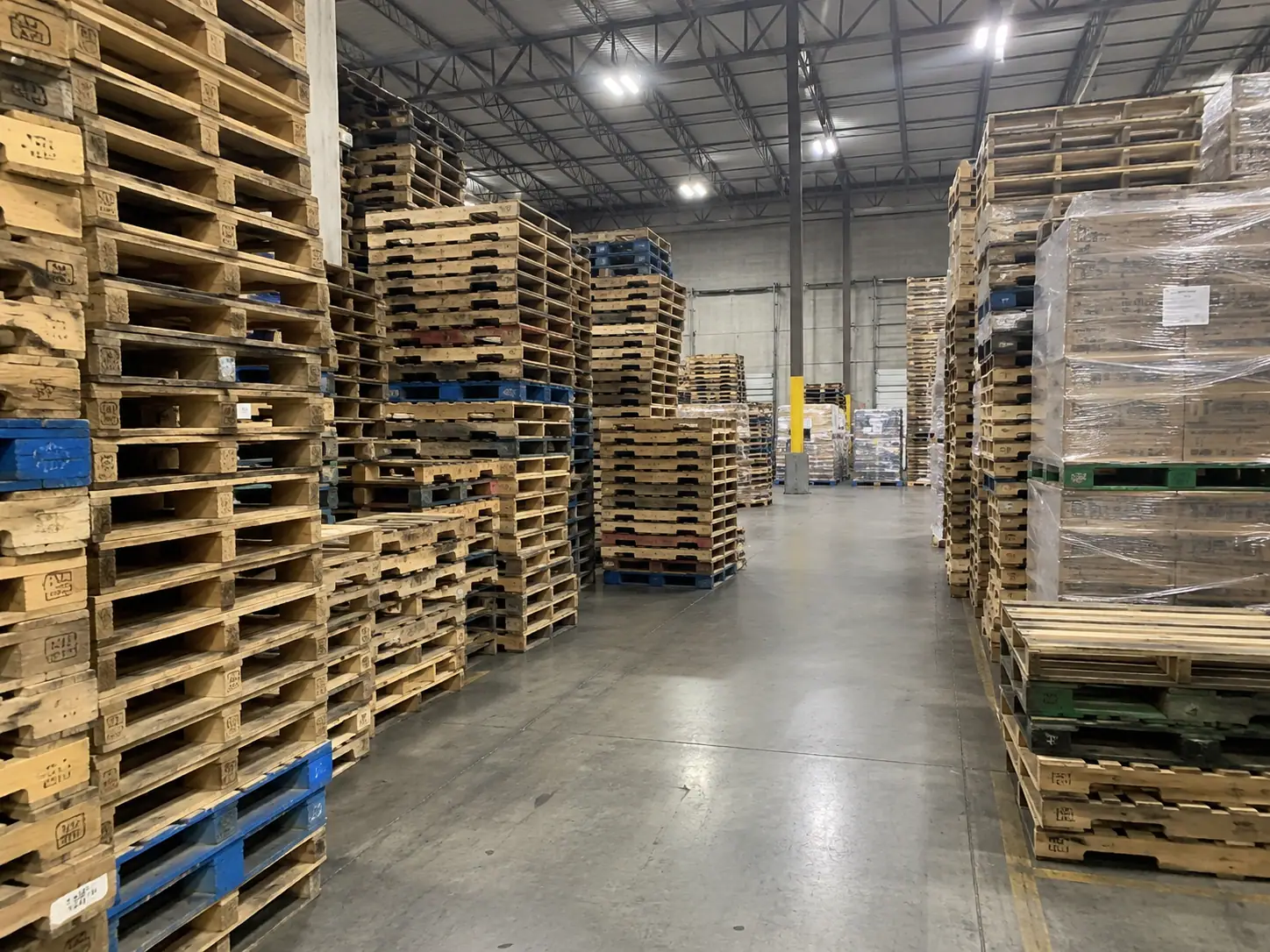
Pallets sit longer. A pallet that would have turned around in three weeks sits for three months, frequently outside, and comes back wet. Weather exposure is the single largest destroyer of grade and it correlates directly with dwell time.
Buyers run stock further. When budgets tighten, operations run pallets deeper into their service life before releasing them. What eventually arrives at a recycler is a population that has already given its best cycles to somebody else.
We saw both effects clearly through 2023 and again in the first half of 2026: intake volumes broadly flat, straight-to-reuse yield down nearly three percentage points.
| Market condition | Core price | Availability | Grade A yield | Net effect on buyers |
|---|---|---|---|---|
| Tight (spring, boom) | High | Poor | Good | Expensive but consistent |
| Soft (downturn) | Low | Good | Falling | Cheap but variable |
| Normal | Mid | Good | Good | Unremarkable |
| Disrupted (2021) | Very high | Very poor | Falling | Both problems at once |
The two things to do differently
The second one is the opposite of what most operations do. Budget pressure in a downturn produces just-in-time buying, which is precisely the behaviour that costs the most when conditions tighten again.
- Inspect more, not less. A soft market is when grade discipline slips across the industry, because volume is harder to sell and the temptation to grade generously is highest. Pull ten units on every delivery.
- Buy ahead if you can store dry. A soft market is exactly when to build a buffer, and a buffer bought in a downturn is the thing that removes emergency purchasing when the market turns.
What we do differently
Build inventory. A soft autumn is when covered storage earns its cost, and every one of our better springs has been preceded by a December in which we bought more than we needed.
Push the repair bench harder. With lower straight-to-reuse yield, more of the output has to come from repair, which means dismantling volume has to rise to feed it.
And hold the grading line, which is easier to write than to do when volume is soft and a load is sitting on the deck. That is the whole test of a published standard: it only means something in the quarter when honouring it is inconvenient.