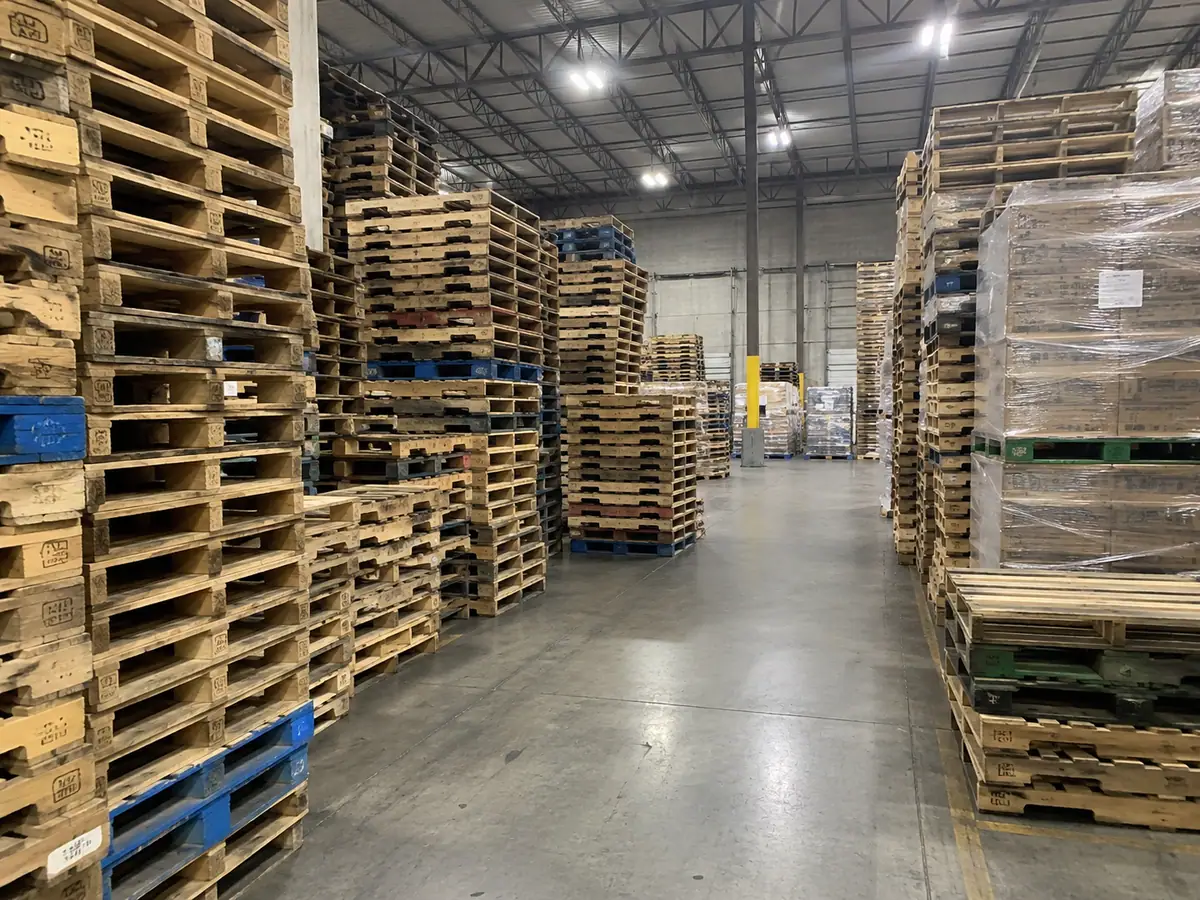
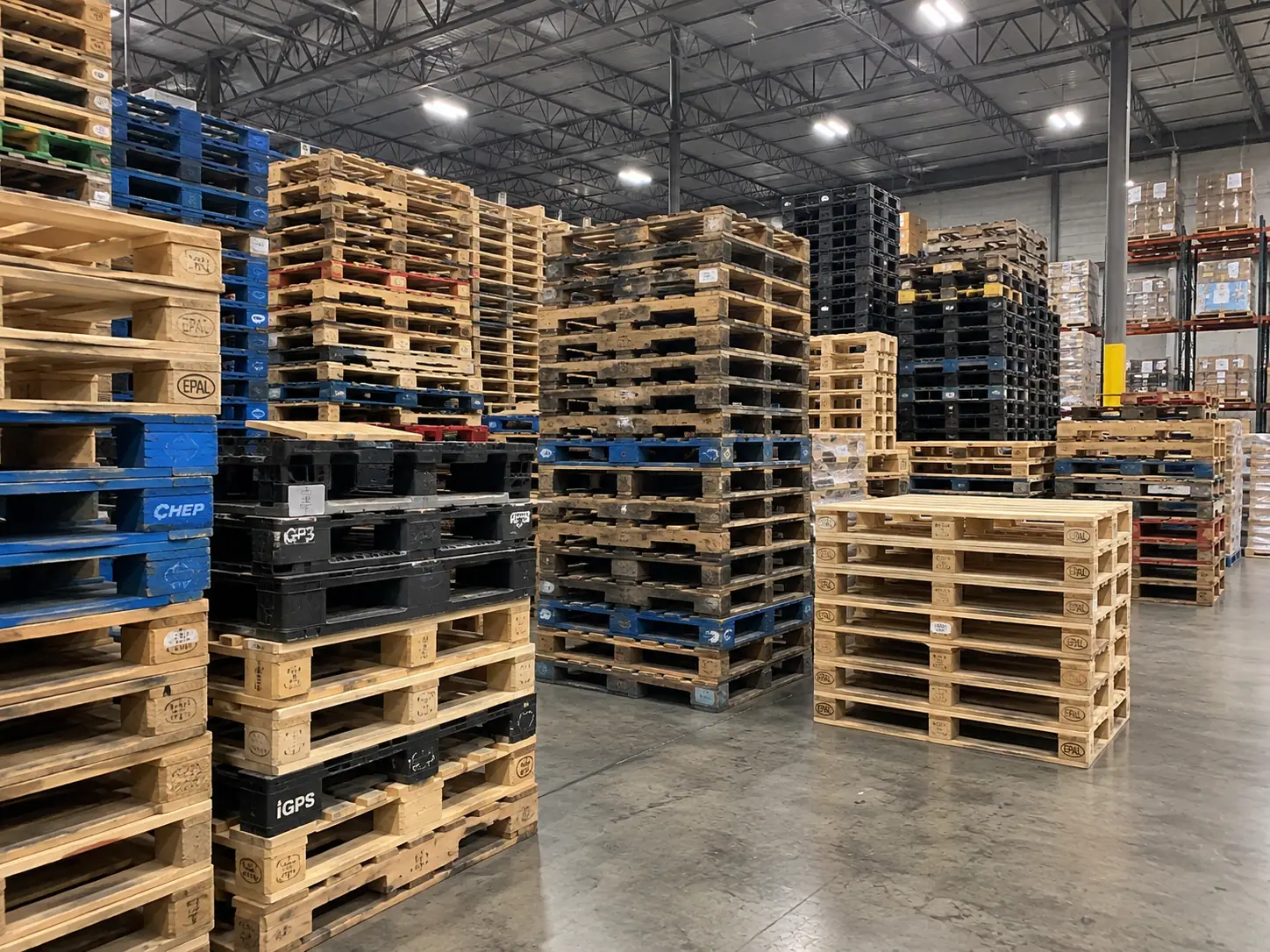
Three or four times a month now, a customer who has bought wood from us for years asks whether they should be looking at plastic. Five years ago that conversation happened perhaps twice a year.
The reasons behind the shift are legitimate. The answer, for most of them, is still no — and it is worth explaining why rather than simply defending our own product.
Why it is coming up more
Hygiene requirements have tightened, particularly in food processing and anywhere with a wash-down zone. Wood is porous and cannot be sanitised the way a moulded surface can, and where a hazard analysis genuinely calls for that, wood loses and should.
Automation. AS/RS and high-speed conveyor systems want dimensional consistency, and moulded plastic holds tolerance better than any wood product. We wrote about this in 2024 and the trend has continued.
Export compliance. Plastic is outside ISPM-15 entirely. For an operation shipping internationally at high frequency, the avoided treatment cost and the avoided hold risk add up.
None of those is a fad and none of them is going away.
And why the answer usually stays wood
Because the arithmetic is dominated by loss rate, and almost nobody asking the question has measured theirs.
A $60 plastic pallet over 80 internal cycles is $0.75 a cycle, against $1.50 for a $9 recycled wood pallet over six. Plastic wins clearly. Now assume a 4% loss per cycle: expected life caps at about 25 cycles regardless of durability, the plastic pallet costs $2.40 a cycle, and wood wins comfortably.
Both of those calculations are correct. Which one applies to you is an empirical question about your operation, and it takes four weeks with a clipboard to answer.
| Loss rate per cycle | Plastic cost/cycle | Recycled wood cost/cycle | Winner |
|---|---|---|---|
| 1% | $0.60 | $1.50 | Plastic, clearly |
| 2% | $1.20 | $1.50 | Plastic, narrowly |
| 4% | $2.40 | $1.50 | Wood |
| 8% | $4.80 | $1.50 | Wood, decisively |
What we actually recommend
A split fleet, more often than not. Plastic for the specific zone that requires it — the wash-down area, the automated aisle, the export lane — and wood for everything else.
The mistake we see is a wholesale conversion driven by a requirement that applies to fifteen per cent of the operation. The requirement is real; extending the solution to the other eighty-five per cent is where the money goes.
It requires keeping the two populations separate, which is a housekeeping problem rather than a technical one, and it requires someone to own the boundary.
The environmental question, since it comes up
An HDPE pallet carries roughly 90 to 130 kg CO₂e of embodied emissions against about 1.2 kg for a recycled wood unit. It needs a great many cycles to break even, and in a one-way application it is dramatically worse rather than better.
In a genuine closed loop with a low loss rate, plastic can come out ahead over its life. That is a real and honest case, and it is exactly the same condition under which it wins on cost.
Which is a convenient conclusion: the loop determines both answers simultaneously, so there is no trade-off to agonise over. Measure the loss rate and both questions resolve at once.