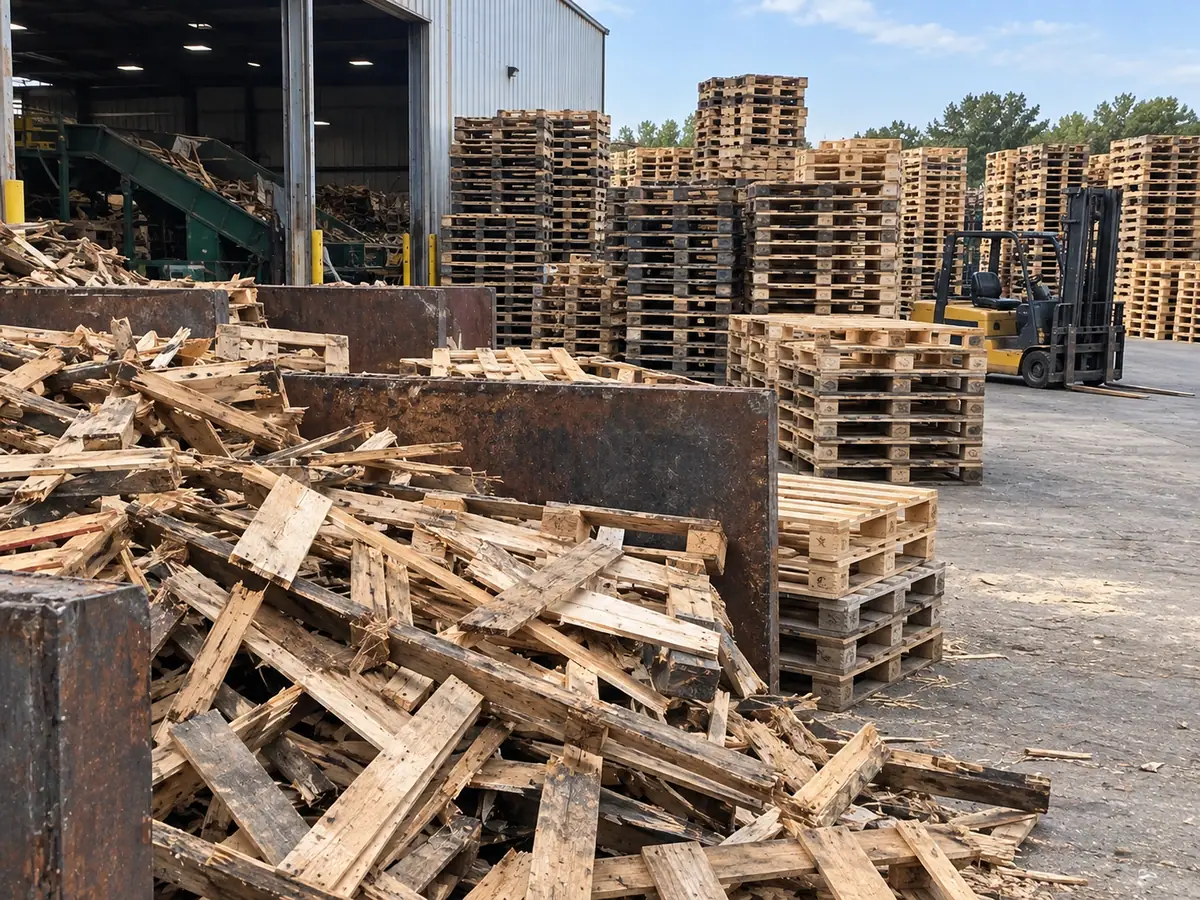
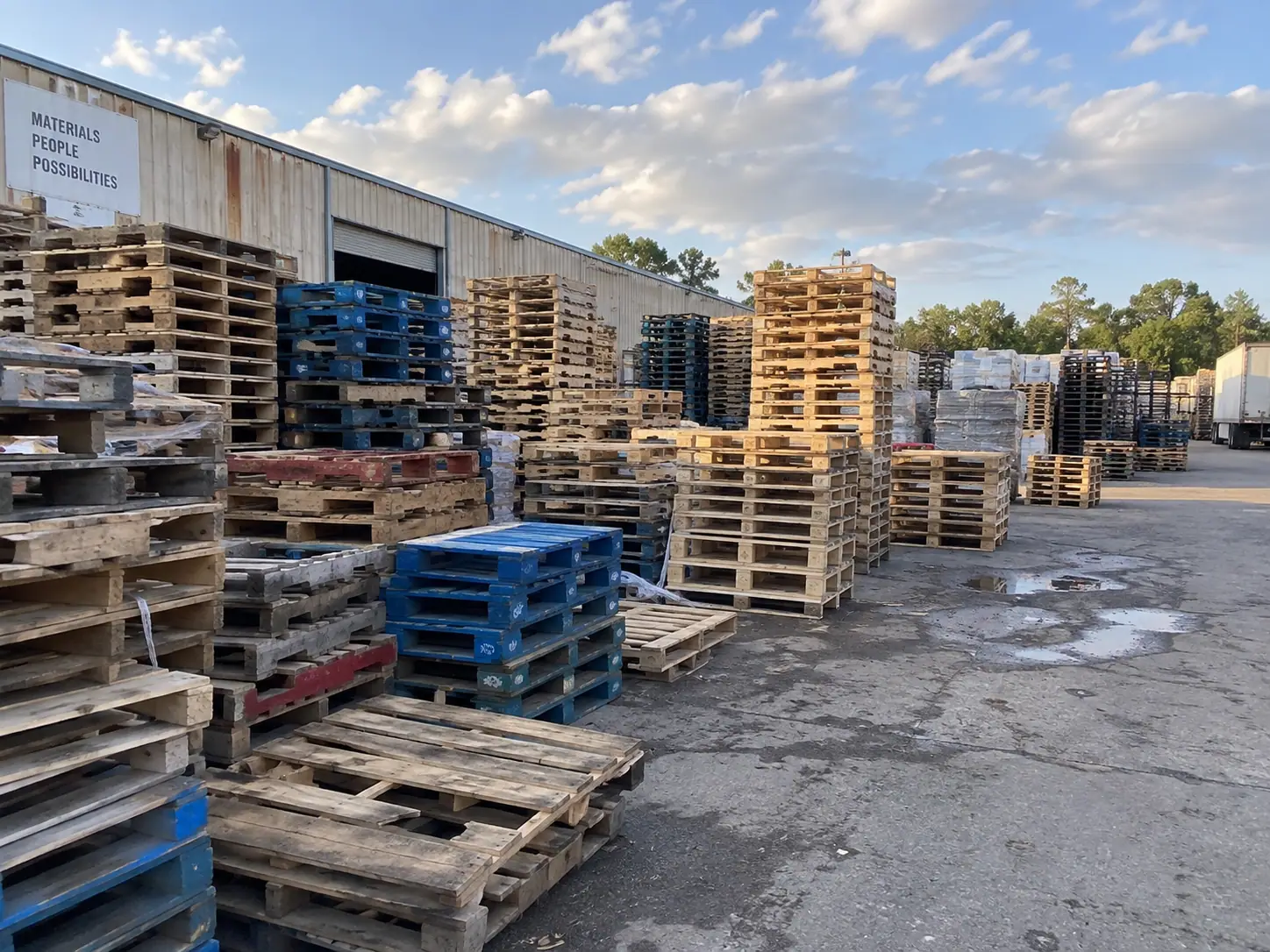
Every February we have the same conversation four or five times. Somebody calls in March needing eight hundred 48×40 units by Friday, and they are surprised by the number. They bought the same thing in January for meaningfully less and they want to know what changed.
Nothing changed about the pallet. What changed is that between January and April, roughly everyone in the eastern half of the United States decides they need pallets in the same eight weeks.
Four demand curves that all peak at once
Pallet demand is not one market. It is at least four, and in the Midwest they happen to peak in the same quarter.
Agriculture and greenhouse operations ramp hard from late March. Landscape and mulch season starts at roughly the same moment. Construction restarts as soon as the ground thaws, and building product moves on pallets in enormous volume. And beverage builds inventory ahead of summer, which is a pallet-hungry business at the best of times.
Any one of those on its own would be absorbed by the market without much noise. All four at once, in a region where the supply of used cores is essentially fixed in the short run, produces exactly what you would expect.
Supply cannot respond quickly
The thing that makes this sharper than it needs to be is that used pallet supply is inelastic on a monthly timescale. We cannot make more cores. Cores arrive when distribution centres finish with them, and distribution centres do not accelerate their consumption because a grower in Wood County needs pallets.
A new pallet manufacturer can, in principle, buy more lumber and run another shift. A recycler cannot buy more used pallets into existence. All we can do is grade faster, repair more aggressively and dig into whatever we held over the winter.
This is why the yards with covered storage and the discipline to build inventory in December are the ones still quoting sensible numbers in April.
| Quarter | Typical direction | What is driving it |
|---|---|---|
| January – February | Softest of the year | Post-holiday distribution slowdown, cores still flowing |
| March – May | Tightest, 25–40% above the floor | Agriculture, landscape, construction and beverage all ramping |
| June – August | Easing | Spring demand satisfied, core flow steady |
| September – November | Second, smaller peak | Harvest, retail build-up to the holidays |
| December | Soft | Distribution winding down, buyers deferring |
What buying around it actually looks like
The version that works is unglamorous. In October or November, agree a volume for the following season at a price fixed then. Take a proportion into your own covered storage if you have it. Leave the rest with your supplier and call it off as you need it.
You are essentially paying a small carrying cost to avoid a large seasonal premium, and in most years that trade is heavily in your favour. In a year where prices fall, you have overpaid slightly and bought certainty, which is what a fixed price is for.
The version that does not work is deciding in February to wait and see. February is exactly when the market is about to move against you.
- Book volume in the autumn, priced then
- Hold two to four weeks of usage under cover if you have the space
- Leave the balance with your supplier against call-offs
- Never plan to buy your peak-season volume on the spot market
Selling works the other way round
If you are on the other side of this — generating empties rather than consuming pallets — the seasonality works in your favour and almost nobody uses it.
Cores are worth more when yards are short. If your volume is flexible, holding a load through February and selling it in April is a real uplift for zero effort beyond having somewhere dry to put it. The critical word is dry: a stack that sits outside through a wet March loses a grade and everything you gained.