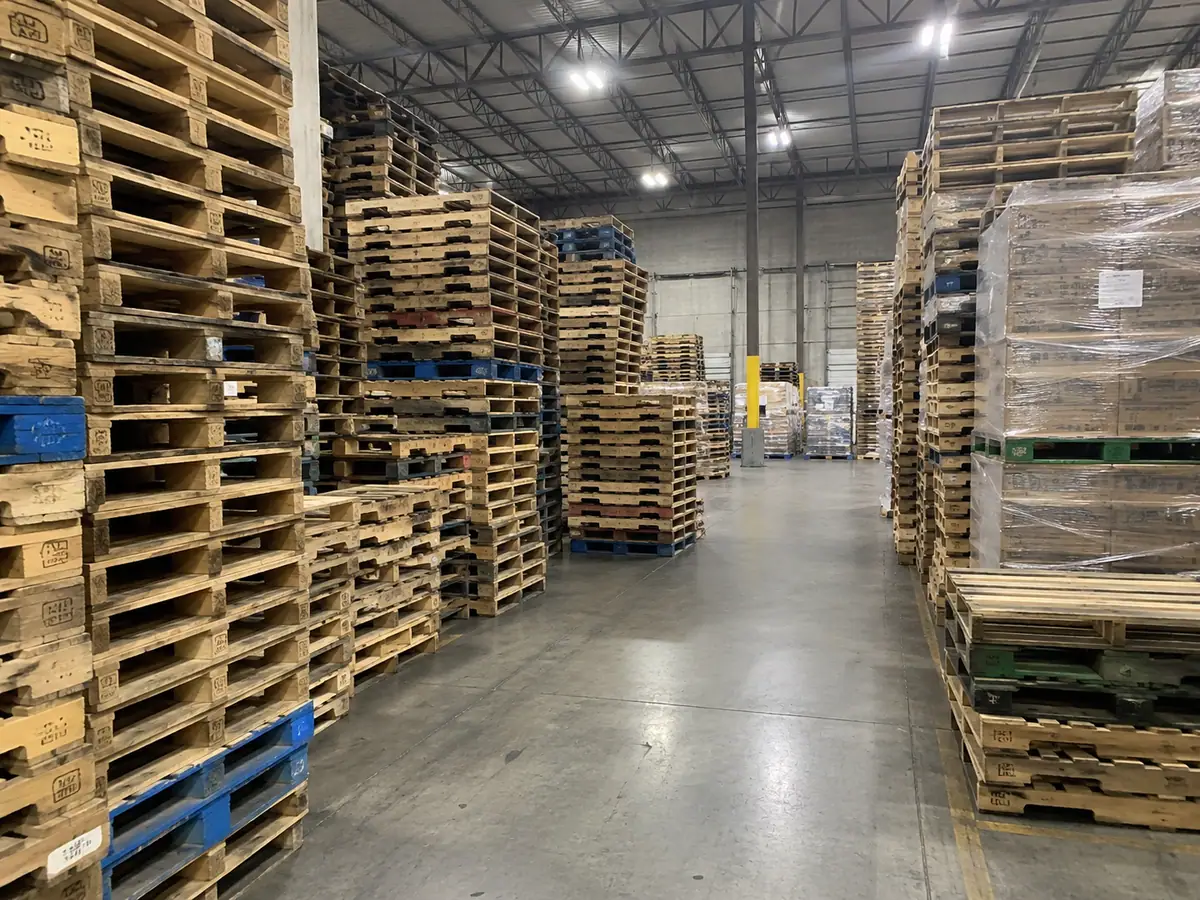
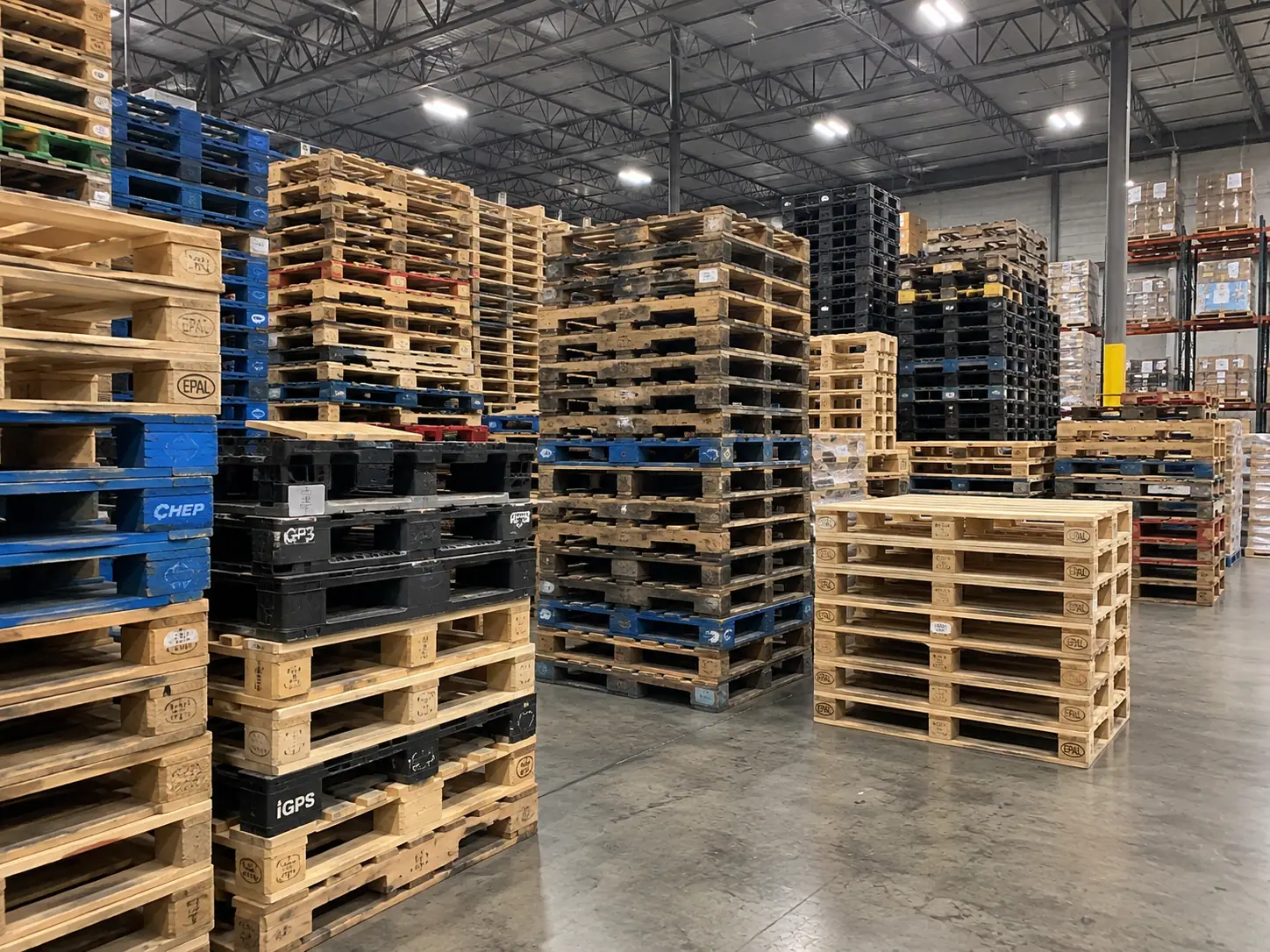
ISPM-15 is a simple rule: solid wood packaging over 6 mm thick must be treated and marked before it crosses most borders. Heat to 56 °C for thirty continuous minutes, stamp it, done.
The failures are almost never about the rule. They are about the eight things that can happen to a compliant pallet between treatment and the port. Here are five we have watched happen, anonymised but otherwise accurate.
One: repaired with untreated boards
A manufacturer had a fleet of correctly marked heat-treated pallets. Over eighteen months, a local repair yard replaced deck boards on perhaps a third of them, using ordinary recovered lumber.
Every one of those units was still carrying a valid-looking IPPC mark and none of them was compliant. The rule is unambiguous: any replacement component on a marked unit must itself be heat treated, and the unit must be re-marked.
The shipment that got held was the one where an inspector looked closely at a replacement board with a visibly different weathering pattern from the rest of the deck. The cost was demurrage plus port-side treatment, and then a fleet audit.
Two: the mark was under a label
A shipper's own warehouse label went on the stringer face, directly across the IPPC mark, because that is where the label applicator was set to apply it.
The pallet was fully compliant. The mark was legible under the label. It did not matter — the mark must be legible on at least two opposing sides, and an inspector is not required to peel your labelling off to find it.
This one is trivially avoidable and we see it constantly. It is worth walking your labelling process once with the mark position in mind.
Three: KD mistaken for HT
A buyer specified 'kiln dried' pallets to their supplier, believing it to be the same thing as heat treatment. They received exactly what they ordered — properly kiln-dried lumber, stamped KD, entirely unsuitable for export.
Kiln drying and heat treatment are different processes with different requirements, and a KD stamp is not an IPPC mark. The confusion is common enough that it is worth stating in the purchase order: 'ISPM-15 heat treated, IPPC marked'.
The consignment was re-palletised at the port at considerable expense, which is the good outcome. The bad outcome is destruction.
Four: bark on a stringer edge
Some destinations require debarked wood in addition to treatment. A run of new pallets had a strip of residual bark along one stringer edge — a few square inches, on a small proportion of units.
It triggered an inspection hold on an entire container. The material was compliant on treatment and non-compliant on debarking, and the inspector had no reason to treat that as a technicality.
Worth checking with your consignee's broker whether the destination applies a debarking requirement, because it is not universal and it is easy to miss.
Five: the dunnage nobody thought about
This is the one that catches out otherwise careful operations. The pallets were compliant. The crate was compliant. The lengths of scrap timber used to block and brace the load inside the container were ordinary yard offcuts.
ISPM-15 covers dunnage, blocking and bracing. Untreated wood inside the container is untreated wood crossing a border, and it is treated exactly the same way.
Keep a marked, treated dunnage stock separate from your general offcuts, and brief whoever loads containers. It is a five-minute conversation that prevents a very expensive week.
| Failure | Frequency in our experience | Avoidable by |
|---|---|---|
| Untreated repair | Most common | Auditing your repair yard's process |
| Mark obscured | Common | Checking your labelling positions |
| KD confused with HT | Occasional but expensive | Explicit wording in the purchase order |
| Residual bark | Occasional | Confirming the destination's requirements |
| Untreated dunnage | Underreported | Segregating a treated dunnage stock |