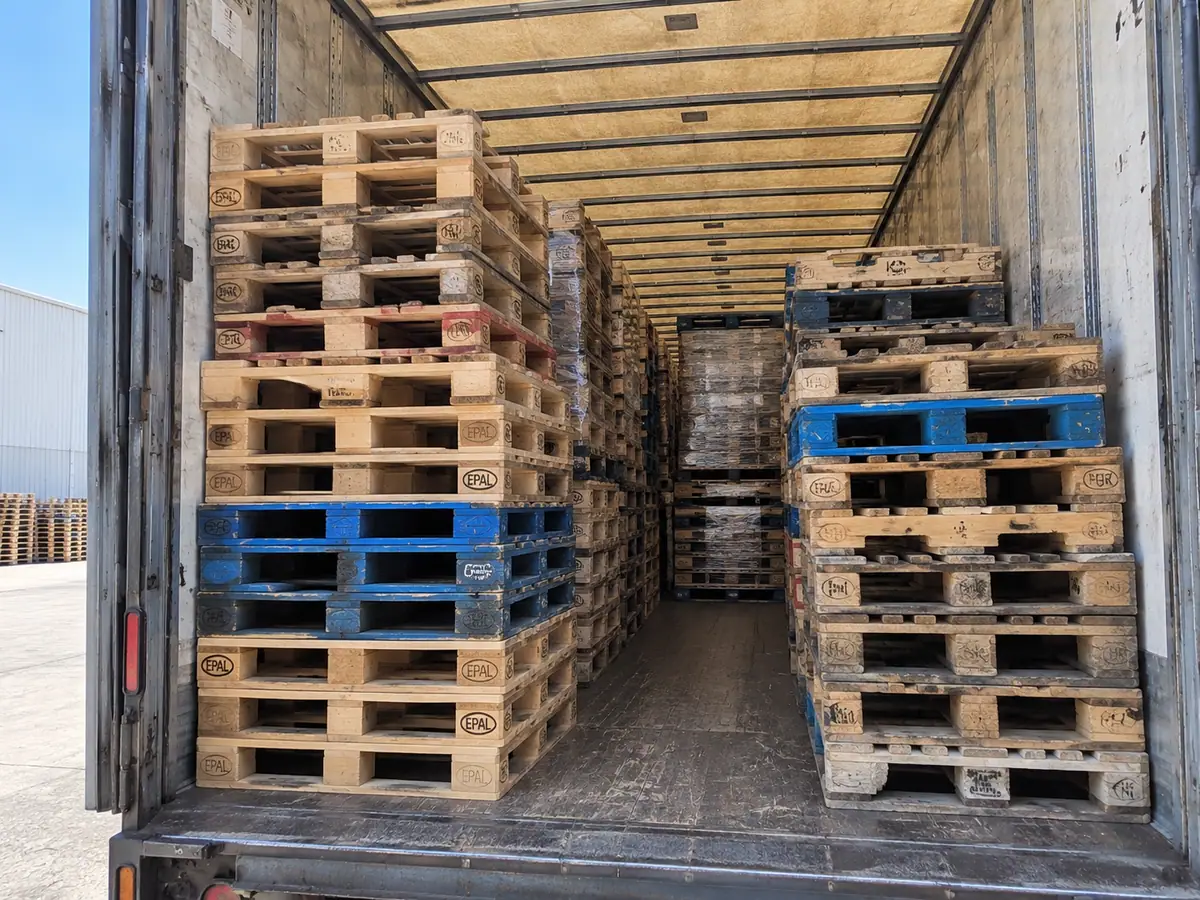
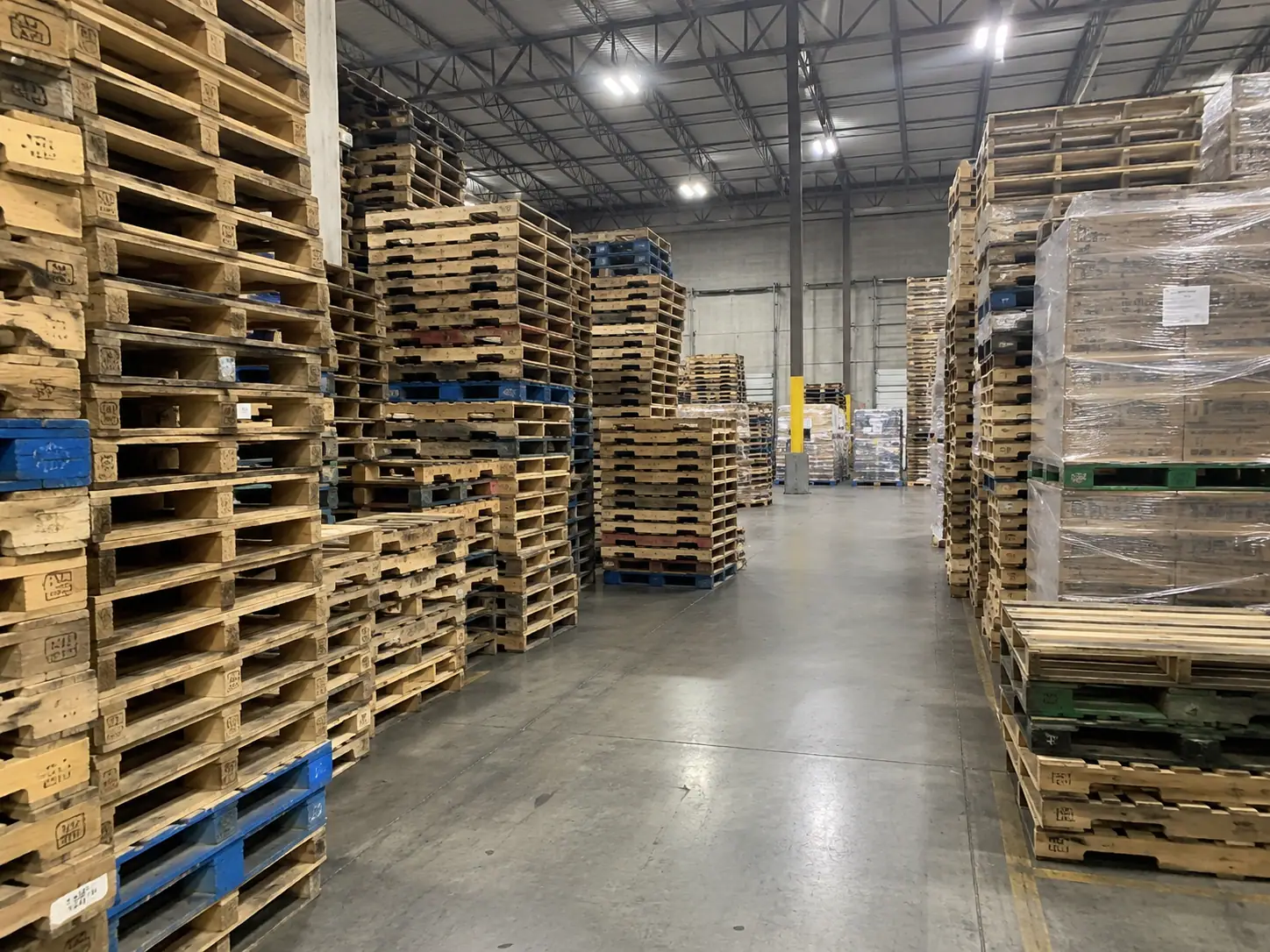
It is the second week of April and the yard has been at capacity since the end of March. Graded stock is leaving faster than cores are arriving, the covered storage we filled in December is down to the last few rows, and the phone version of this business is entirely people asking whether we have anything at all.
This happens every year and it is entirely predictable, which makes it interesting that so few buyers plan for it.
What arriving looks like right now
Inbound volume is actually up — spring means distribution is busy and busy distribution generates empties. But the mix has shifted. A lot of what comes in has been sitting outside somewhere through a wet March, which means moisture, which means a grade drop.
So we are receiving more units and producing less Grade A per unit received. The sort deck is running full and the repair bench is the bottleneck, because a higher proportion of what we receive needs work before it can go out again.
Meanwhile the outbound side wants everything we have, immediately, mostly in 48×40 Grade A.
The four demand curves, again
- Greenhouse and nursery. The steepest ramp of any sector we serve. Zero to full volume in about three weeks.
- Landscape and mulch. Both a pallet consumer and, for us, a customer for the fibre coming off the grinder. Peaks at the same moment.
- Construction and building product. Restarts with the ground thaw, moves dense product on heavy-deck stock.
- Beverage. Builds inventory ahead of summer. Large, steady, and unwilling to wait.
What we do about it internally
Build inventory in December, when cores are cheap and demand is soft. Covered storage is the constraint and it is the reason we keep expanding it.
Push the repair bench harder, which means the dismantling line has to run harder to feed it, which means we are dismantling units in April that we might have graded through in October. That is a deliberate trade: recovered lumber is more valuable to us in spring than a marginal Grade B pallet is.
And we say no. Every year we turn away spot orders in April, because taking them would mean shorting a customer who booked in November, and the customer who booked in November is the reason this business works.
The version where this does not happen to you
Book in October. Take a proportion into covered storage. Leave the balance with your supplier against call-offs. It is the same advice we give every year and the customers who take it do not read blog posts about spring shortages, because they do not have one.
The other half of it is being flexible on grade. An operation that specifies Grade A for genuinely everything has removed its own room to manoeuvre in exactly the quarter when it needs it most.