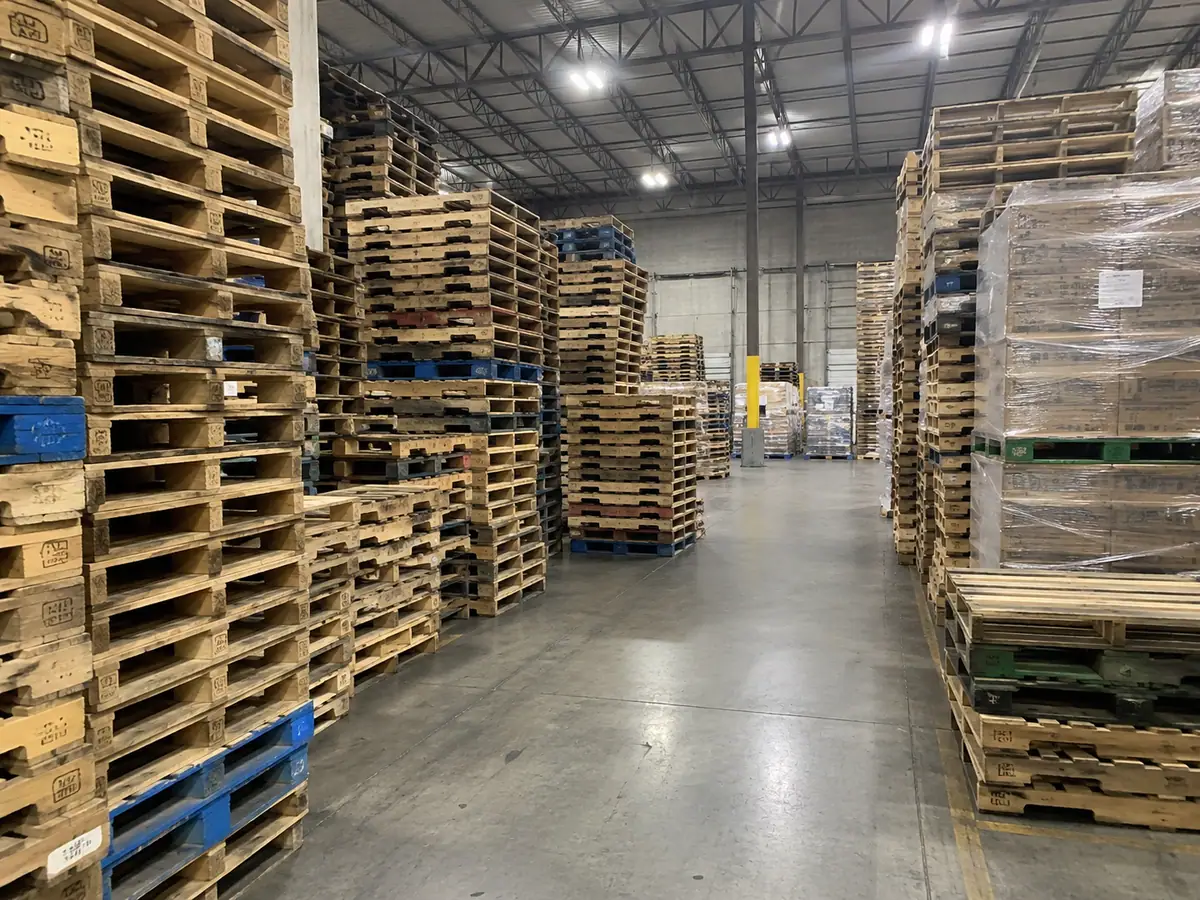
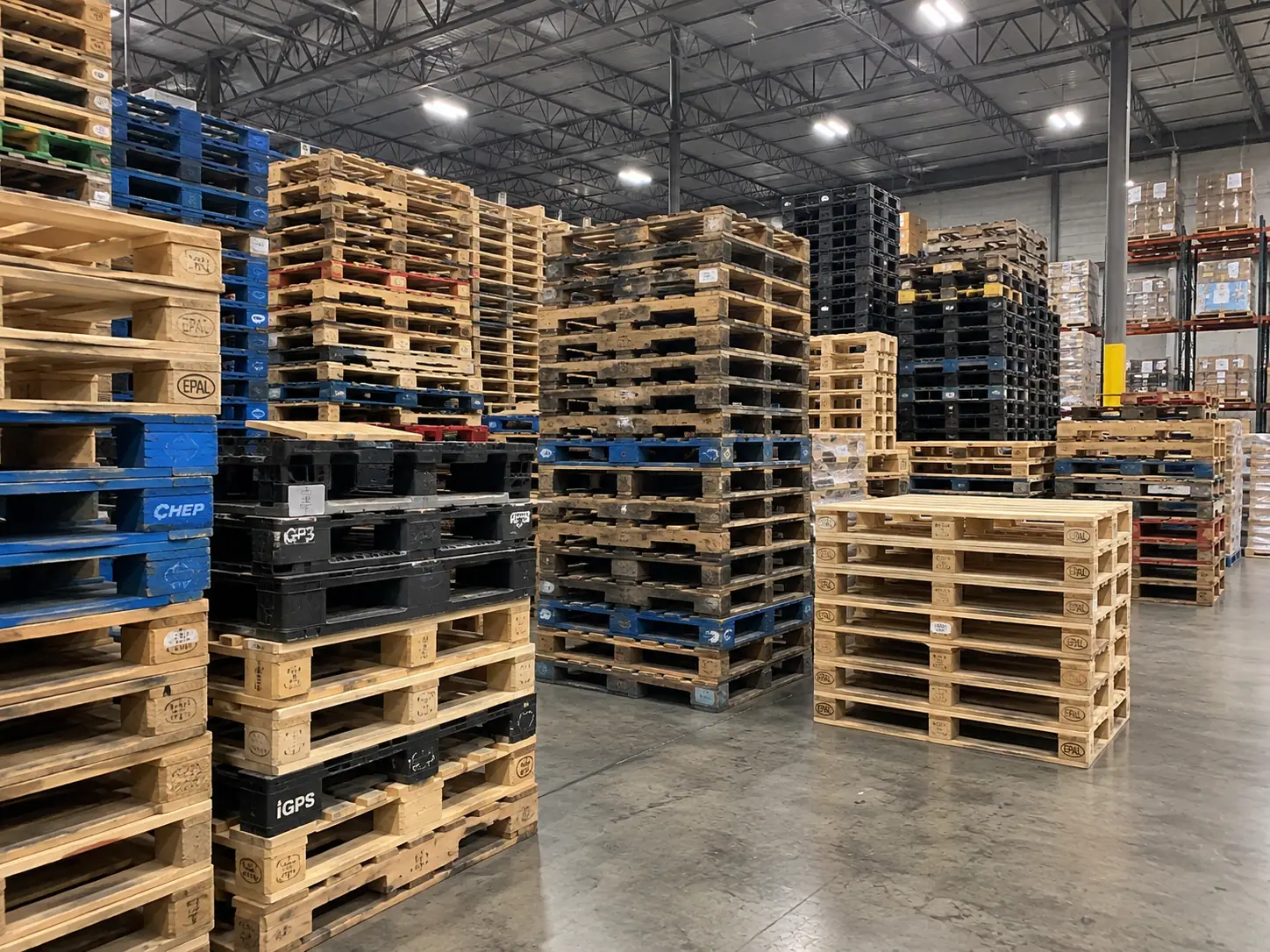
Nobody orders a pallet by species. You order a footprint and a grade, and whatever arrives is whatever the mill or the sort deck had.
That is mostly fine, and occasionally it is the reason a load fails. Species is the variable behind more unexplained pallet performance differences than any other, and it is almost never on the specification.
The three groups you will actually encounter
Mixed northern hardwood. Oak, maple, ash, gum, poplar and whatever else the mill was cutting. This is the bulk of the North American recycled pallet population. Dense, strong, heavy, excellent nail holding.
SPF — spruce, pine and fir. The softwood group, dominant in new pallet production because it is cheaper and lighter. Adequate strength for most static loads, noticeably worse nail retention.
Poplar and other low-density hardwoods. Technically hardwood, in practice closer to softwood in density. Common in recycled stock, usually as deck boards rather than stringers.
| Group | Density | Nail holding | 48×40 weight | Typical role |
|---|---|---|---|---|
| Oak, maple, ash | High | Excellent | 50–60 lb | Stringers and deck in premium builds |
| Mixed hardwood | Medium-high | Very good | 45–55 lb | The bulk of recycled stock |
| Poplar, gum | Medium | Good | 42–50 lb | Deck boards, lighter builds |
| SPF | Low | Fair | 35–42 lb | New economy pallets, one-way freight |
Nail holding is the property that matters most
Strength gets the attention, but the thing that determines how long a pallet lasts is whether the fasteners stay tight.
A pallet fails progressively. Nails loosen slightly, the unit racks out of square, out-of-square puts uneven load on the members, members crack. Almost every pallet that reaches end of life did so through that sequence rather than through a single overload event.
Dense hardwood grips a helically-threaded nail hard and keeps gripping through many cycles. Softwood does not, particularly if it was fastened green and has since dried, which loosens every fastener in the unit simultaneously.
Why weight is the trade-off you cannot escape
Density is what gives you strength and nail holding, and density is what makes the pallet heavy. There is no species that is light and strong; the property that delivers one delivers the other.
So the species choice is really a freight decision. On a long lane where you pay by weight, an SPF pallet at 38 lb against a hardwood at 55 lb saves real money — about 5,600 lb on a 330-unit trailer.
On an internal fleet where the pallet cycles forty times a year, weight is irrelevant and nail holding is everything. Different applications, opposite answers.
What we can and cannot do about it
We sort recycled stock by grade, not by species, and we say so plainly. A Grade A recycled 48×40 from our yard will typically contain three or four different species across its members. That is inherent to recycled material and we will not pretend otherwise.
Where a specification genuinely requires a single species group — some automated systems and some engineered applications do — we say we cannot supply it from recycled stock and quote a new build instead.
What we can do is tell you what is in a load, because the graders can identify what they are handling. If species matters to you, ask, and we will describe the mix honestly rather than guess.